I spent two years building a fortress out of landscape architecture and gardening, thinking that if I could just control the soil and the stone, I could control my own peace. My life in Portland became a sequence of precise, predictable measurements. I moved from the chaos of my marriage to Elliot Vance into a world where everything had a place and a reason. I was thirty-six, and I had finally stopped listening for the sound of a phantom baby crying in the guest room.
I had finally stopped checking the calendar for my cycles. I was safe.
That safety lasted until 9:42 p.m. on a rainy Tuesday. I was sitting on my sofa with a graphite pencil in my hand, trying to fix the grading on a retaining wall sketch, when my phone vibrated against the wood of the coffee table. The screen lit up with a Facebook message notification. The name on the alert made my blood run cold. It was Meredith Vance.
I hadn’t spoken to Elliot since the day the divorce papers were signed two years ago. I stared at the screen, my thumb hovering over the block button. I didn’t want his new wife’s drama. I didn’t want the remnants of his life creeping into my carefully curated silence. But then the message preview showed the first sentence: “I know this is strange, but I need to ask you something.”
My curiosity, that old, dangerous muscle, flicked to life. I opened the thread.
“Did Elliot tell you that your three IVF cycles failed because of your egg quality, or did he show you the vasectomy record from 2018?”
The world outside my window, the rain, the city, the steady hum of the streetlights, just sort of stopped. My brain couldn’t process the sentence. I read it again. And again. I didn’t have a child. I didn’t have a child because the doctors at the Pacific Crest Reproductive Institute had told me, year after year, that my body was simply unable to produce viable embryos. I had endured the shots, the invasive procedures, and the crushing weight of that verdict for five years.
I didn’t reply to her. I couldn’t. I just sat there until my hands started to shake.
The next morning, I was at the front desk of the Pacific Crest Reproductive Institute before they even unlocked the glass doors.
I was a structural architect. I knew how to read blueprints and how to follow a paper trail. If there was a lie in my records, I was going to find it. The receptionist tried to tell me I needed an appointment, but I wasn’t leaving.
“I have a right to my medical files,” I said, my voice sounding steadier than I felt.
After an hour of waiting, they put me in a small consultation room. The administrator was a man named Dr. Thorne. He kept wiping his palms on his trousers. He told me that my files from 2021 were archived off-site, handled by a compliance firm. My heart did a slow, painful somersault. Elliot worked for that firm. He was a senior compliance auditor for the exact company that managed the clinic’s data storage.
“I don’t care where they are,” I told him. “Get them.”
I threatened the medical board. I threatened a lawsuit that would dismantle the place, brick by brick.
I didn’t need to be loud; I just needed to be certain. Ten minutes later, a junior clerk brought in a stack of digital printouts. I sat there in the silence, flipping through pages of charts I had seen a hundred times before. But this time, I wasn’t looking at the summary. I was looking at the raw logs.
There it was. October 2021. The chart said the cycle had failed. But the raw data showed four high-grade blastocysts, perfectly healthy, perfectly viable. They hadn’t degraded. They had been moved. The digital signature on the transfer order belonged to a shell company I recognized from my own marriage filings.
I walked out of that clinic feeling like the ground had turned to liquid. My genetic material hadn’t failed. It had been stolen.
I met Meredith in a small, quiet park by the river later that day. She looked exhausted. She was twenty-nine, and she had the hollowed-out look of a woman who had been living with a ghost. She didn’t say much at first, just pushed a thick folder of documents across the bench.
“He’s sick,” she said, her voice barely a whisper. “He carries the Huntington’s gene.”
I felt the air rush out of my lungs. Huntington’s. It explained the vanity. It explained why he was so obsessed with his image, why he climbed the corporate ladder with such desperate, predatory speed. He wanted to be perfect because he knew, deep down, that he was carrying a ticking clock in his own blood.
He didn’t want kids who carried the mutation. But he didn’t want to admit he was the problem. So he lied. He let me believe I was broken for years. He let me go through the hell of fertility treatments, watching me cry, watching me pull away, all while he was secretly harvesting my eggs and fertilizing them with donor sperm, keeping the embryos frozen under a corporate account like they were some kind of sick insurance policy. He treated my body like a research project and my grief like a useful distraction.
“He kept the storage bills,” Meredith said, looking at her hands. “I found them in his home office safe.”
“Why are you telling me this?” I asked.
She looked up at me then, her eyes wet. “Because I don’t want to be the next thing he breaks.”
I didn’t feel rage, not at first. I felt a cold, sharp clarity. It was like I was back on a job site, looking at a cracked foundation. You don’t scream at the crack. You figure out how to shore it up and then you take the building down.
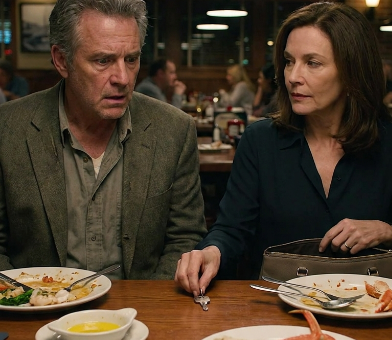
The final confrontation happened three days later in the boardroom of the Pacific Crest Institute. It was a sterile, glass-walled room that smelled of floor wax and expensive air conditioning. Elliot was there with Dr. Thorne, looking over a quarterly audit. He looked exactly the same as he did two years ago. Same tailored suit, same easy, practiced smile.
He looked at me like I was a mistake.
“Rachel?” he said, his voice smooth. “This is a private audit. You need to leave.”
I didn’t say a word. I walked to the head of the table and laid the printouts down. I put the laboratory logs right in front of him. Then I put the storage receipts from his shell company on top.
“We have the forensic auditor outside, Elliot,” I said. “And the state board has the server logs.”
His face didn’t go pale. It just went blank. The smile didn’t vanish, it just sort of withered. “What is this?”
“It’s the truth,” I said. “You stole my eggs. You falsified my medical files. You made me believe I was infertile to protect your vanity.”
“You don’t understand,” he started, his voice rising, a little bit of that frantic energy creeping in. “It was just a backup. It was for our future.”
“There is no our,” I said.
I didn’t yell. I didn’t cry. I just waited for him to realize that the person he had been manipulating for eight years was gone. He tried to dismiss me, tried to call Meredith over to his side, but she was already standing with the investigator by the door.
“You’re done, Elliot,” I said.
I didn’t want a trial. I didn’t want to drag this out in public for years. I had already lost five years of my life to his ego. I wasn’t giving him one more second. I used the evidence of the fraud to force his hand. I told him he could sign the papers to hand over full ownership of the embryos to me, or I would personally walk the evidence over to the state prosecutor’s office and let them handle the felony charges for medical identity theft.
The room was silent for a long time. Dr. Thorne looked at the door, then back at his desk, then at Elliot. He knew the game was over. He signed his resignation on the spot. Elliot signed the transfer documents with a shaking hand, his face gray, his career as a pharma auditor evaporating right there in that glass cage.
Meredith didn’t even look back at him when she walked out with me. She was free. I was free.
Two days later, I went back to the facility. This time, I wasn’t there for files. I was there for the end.
The technician took me into the vault, a room kept at a temperature that felt like the heart of winter. It was quiet, save for the rhythmic hum of the nitrogen tanks. He found the right drawer, the right straw. It was just a small, numbered container. It represented everything he had stolen, every lie he had told, every dream I had been forced to bury in the dark.
I stood there by the stainless steel waste receptacle. I didn’t feel broken anymore. I felt cold, and clean, and finished.
“Are you ready?” the technician asked.
“Yes,” I said.
I watched him place the material into the chemical neutralizer. The liquid bubbled for a second, a quiet, hissing sound in the sterile room. A faint, frosty vapor rose up and dissipated into the air.
The heavy, suffocating weight I had been carrying for years, the feeling that I was somehow insufficient, the feeling that my body had failed me, finally broke apart. It just vanished. There was no more to say. There was no more to measure. I turned around and walked out of the room, leaving the silence behind me, and for the first time in my life, I didn’t look back at the past.