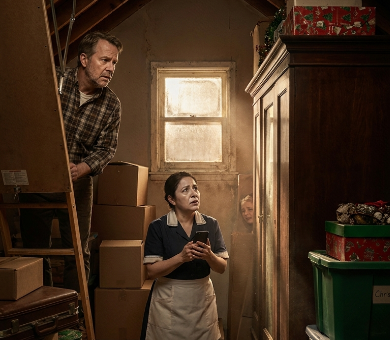
The kitchen in our family home always smelled like floor wax and the faint, lingering scent of the peppermint tea Mama liked to drink. I spent three years in that room. I lived in the drafty back bedroom, slept on a twin bed that creaked if I moved, and spent my days managing oxygen levels and medical charts while the house slowly decayed around us. My older sister, Wanda, and my younger brother, Julian, were distant ghosts in my life.
They were names on birthday cards that arrived three weeks late and voices on the phone that asked for updates on Mama’s health only to pivot to questions about when the house would be sold. I kept my head down. I did the work because someone had to, and I assumed that the truth of it mattered.
The Monday after the funeral, we met at Arthur Sterling’s office. It was a cold, sterile room with mahogany paneling that looked like it hadn’t been dusted since the eighties. Wanda sat across from me in a coat that probably cost more than my entire car. She was tapping her designer heels against the carpet with a rhythm that set my teeth on edge. Julian was on his phone, scrolling through market listings, looking bored as if he had somewhere better to be. When the attorney finally finished reading the will, the silence in the room felt heavy, like a physical weight pressing down on my chest.
Wanda got the family estate and the $130,000 in liquid certificates of deposit. Julian was awarded the forty acres of timberland that bordered the north side of the county. Then, Mr. Sterling looked at me with that practiced, pitying expression he’d clearly mastered for families like ours. He told me that Mama had left me the contents of the kitchen pantry shelves, specifically the collection of decorative glass storage jars. Wanda didn’t even try to hide her reaction. She let out a sharp, mocking laugh that cut through the silence. She told me that I always did have a taste for junk and that it was fitting I ended up with the scraps. I didn’t argue. I just packed the dusty, mismatched jars into a cardboard box and drove away.
That night in my small apartment, the reality of it settled in. I sat on my kitchen floor, staring at the box.
I felt like a fool. I had convinced myself that Mama noticed my presence, that she saw the years I lost, but the will was a clear message. I was the help. I was the person they used to keep the house clean while they waited for the inheritance to pay out. I reached into the box and pulled out the largest piece, a heavy, amber-colored glass rooster. It had a jagged chip on its beak and a layer of grime that felt greasy under my thumb. I decided right then that I would wash them, donate the lot to the local thrift shop, and never speak to Wanda or Julian again.
I ran a sink full of hot, soapy water. The jar felt unusually dense as I lowered it into the basin. It didn’t bob like a normal piece of glass; it sank with a heavy, deliberate thud that sounded wrong against the porcelain.
I frowned and lifted it back out. The base of the jar was far thicker than the sides. I tilted it, and I heard a faint, scraping sound from deep inside the glass structure. It wasn’t just a jar; it was a container. I grabbed a pair of tongs from my drawer, feeling a sudden, sharp prickle of curiosity that I hadn’t felt in years. I pried at the tightly wedged, waxy dishrag stuffed into the neck.
It took me ten minutes of tugging until the fabric finally popped free. Beneath it, hidden in a compartment built into the double-thick base, was a roll of parchment wrapped in a rotted rubber band. I unrolled it under the kitchen light. My hands were shaking so hard I almost dropped the jar. They weren’t recipes. They were four bearer bonds, each with a face value of $50,000, matured and untraceable. I stared at the paper for a long time, the numbers blurring in front of me. Mama hadn’t abandoned me. She had been hiding her assets in the only place she knew Wanda and Julian would never look: among the things they considered worthless.
I found a note tucked into the center of the roll. It was a guide, written in Mama’s shaky, late-stage handwriting. She told me that Wanda had already leveraged the house equity to cover her husband’s bad investments and that Julian was drowning in back taxes. She told me to take the bonds to the treasury office in Columbus before I signed any releases. She told me to buy the secondary mortgage note. The final sentence was the one that stayed with me, the one I read until the ink seemed to burn into my eyes. She said that while they wanted the title, I was the one who was going to take the ground.
I didn’t sleep for three days. I went to Columbus. I went to the bank. I did everything Mama had outlined in her neat, precise script. By the time I walked back into Mr. Sterling’s office on Thursday afternoon, I wasn’t the grieving, exhausted daughter anymore. I was a person with leverage. Wanda had the pen ready, sliding it across the wood with a smile that didn’t reach her eyes. She told me to just sign the release so we could put the house on the market and move on with our lives. She kept talking about how much the property was worth, how they could finally clear their debts and start fresh.
I didn’t take the pen. I placed a copy of the bank note on top of her papers. I told her that the title wasn’t hers to clear anymore. I watched the color drain out of her face. It was a slow, beautiful process. I told her that I had purchased the secondary mortgage note for $180,000 cash the day before. I told her that she had been in default on that equity line for three months and that I was the primary lienholder now. I told her that the sale was denied and that I was starting the foreclosure process immediately.
Julian stood up so fast his chair hit the glass partition, the sound echoing like a gunshot in the quiet office. He started shouting, calling it a fraud, calling it a trick, but the look on Wanda’s face was the only thing that mattered. She looked smaller than she had in years. The arrogance was gone, replaced by a raw, hollow terror. I didn’t yell back. I didn’t need to. I just sat there, waiting for them to realize that the game had changed. I told them that if they wanted to fight it, they were welcome to try, but I had Mama’s diary logs documenting every single forged power-of-attorney signature they had used while she was still alive.
They folded. Julian signed the waiver of his executor claims within the hour, desperate to avoid a forensic audit of his own finances. Wanda was forced to vacate the family house by the end of the month. I watched from the driveway as she loaded her designer boxes into a small rental truck, her husband shouting at her from the sidewalk. She looked at me once, her eyes filled with a kind of hatred that I found strangely comforting. She realized then that she had lost the house, the money, and the power, all because she hadn’t bothered to look inside a chipped glass rooster.
Two weeks later, the house was quiet for the first time in my life. The air didn’t smell like tea or medicine anymore. It just smelled like sunlight and wood. I walked into the kitchen and set the amber rooster jar on the center of the pantry shelf. It looked perfect there, clean and empty in the morning light. I realized then that I had won, but the house felt vast and hollow. I sat at the table and poured myself a cup of tea, the silence pressing in from all sides. I had the ground, but I had spent so long fighting for it that I wasn’t entirely sure what I was supposed to do with it now that it was finally mine.