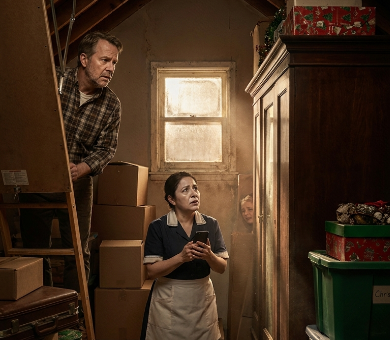
I spent ten years building a life that was supposed to be bulletproof. In the Army, we call it logistics. You map the route, you secure the assets, and you anticipate the friction points before they ever have a chance to stall your momentum. I was good at it. I was so good at it that I’d just been promoted to a Tier 5 command position in Washington, D.C. It was the kind of career milestone that keeps you awake at night with the sheer weight of the responsibility.
I thought I had accounted for every variable, every potential disaster, and every possible threat to my mission.
I was wrong. I forgot to account for the people sitting at my own kitchen table.
It was 3:14 in the morning when I woke up. I didn’t wake up to an alarm, and I didn’t wake up because of a bad dream. I woke up because of a sound. It was the dry, rhythmic rasp of metal against hair. I was in the guest wing of the Vance estate in Alexandria, a house that smelled like old money, floor wax, and the kind of suffocating silence that usually comes right before a storm. I reached up toward my head, still half-asleep, and my fingers didn’t find the soft weight of my regulation bun. They found raw, weeping skin and jagged, uneven patches of stubble.
I sat up, my heart doing a slow, controlled beat. The room was dark, but the light from the hallway spilled in, casting a long, thin shadow across the bed.
Linda was standing there. My mother-in-law, a woman who spent her days worrying about the placement of her hydrangeas, was holding a pair of heavy-duty electric clippers. Her face was calm. It was the calmness of a woman who had decided that a problem needed to be pruned away.
“You look better this way,” she said. Her voice was thin, sharp, and entirely devoid of heat. “It’s a clear signal, Valerie. You’re done with the military. By morning, you’ll draft a resignation, or we will make sure the entire base knows exactly how unstable you’ve become.”
I didn’t scream. My throat felt dry, like I’d been chewing on sand, but my mind was already racing through a casualty assessment. I looked past her to the doorway. David was leaning against the frame, his arms crossed. He wasn’t wearing pajamas. He was dressed in a suit, his tie perfectly knotted, as if he’d been waiting for this moment for hours.
He didn’t look like a man protecting his wife. He looked like a man watching a demolition project reach its conclusion.
“It’s over, Val,” David said. He sounded tired, but there was a cruel edge to it that I had never heard before. “Just sign the papers. You’re a liability now. My firm can’t survive a Tier 5 background investigation while you’re under the microscope. We need you out, and we need you quiet.”
That was the moment the fog cleared. It wasn’t about the hair. It wasn’t about domestic obedience or some twisted power play by a mother-in-law who hated that I wore a uniform. This was a survival strategy. David’s architectural firm had been hemorrhaging money for months, and he had been cooking the books to keep the estate afloat. My promotion, and the intensive federal audit that came with it, was the only thing standing between them and total financial collapse. They weren’t just being cruel; they were being desperate.
“You really think this will work?” I asked. My voice was steady. I was surprised by how steady it was.
“It has to,” Linda said, stepping closer. “Don’t make this messy, Valerie. We have influence. We have friends who don’t like to see our kind of people humiliated by women in cargo pants.”
I didn’t say another word. I didn’t beg, and I didn’t threaten them. I just stood up. I walked past Linda, my bare feet silent on the hardwood floor, and went into the bathroom. I didn’t look at the mess on the bed. I looked in the mirror. My scalp was nicked in three places, a thin trail of blood running down behind my left ear. I looked like a soldier who had just been through a skirmish, but I still had my eyes. I still had my tactical training. And most importantly, I had the backup file on my phone.
Three months ago, Linda had insisted on installing a smart nursery camera in the guest suite. She said it was to monitor the air quality, but we both knew it was to track when I arrived and when I left. She thought she was spying on my habits. She didn’t realize that the device was cloud-linked to my own administrative server. I pulled my phone from my bag, accessed the feed, and hit the download command. The file size was substantial, but the progress bar moved with the slow, satisfying precision of a closing trap.
I walked back into the bedroom. David was still in the doorway, his face a mask of smug anticipation. He expected me to be crying. He expected me to be bargaining for my life.
“I’m leaving,” I said.
“You’re not going anywhere without signing,” David snapped.
“Watch me.”
I walked to the closet, grabbed my duffel bag, and shoved my remaining clothes into it. I didn’t stop to fold anything. I just moved. I walked out of that room, down the grand staircase, and out the heavy mahogany front door without looking back once. The night air hit my face, cold and biting against my shorn scalp, but for the first time in years, I felt like I could actually breathe.
I drove straight to the base at Fort Belvoir. I didn’t stop for coffee, and I didn’t call anyone. I went to the transit quarters, sat down at my desk, and opened my laptop. I didn’t sleep. I spent the next six hours doing a deep-dive forensic audit of David’s architectural firm. I knew the public registries better than most, and once I knew what I was looking for, the fraud was as plain as day. Inflated invoices for projects that never broke ground. Payments to shell companies registered in the Cayman Islands. A three-year history of wire fraud that would put him away for the rest of his natural life.
It was all there. I cross-referenced the dates of the shell company transfers with the dates of David’s biggest family parties at the estate. He had been paying for their lifestyle with federal money. They weren’t just broke; they were criminals.
By 8:00 a.m., the sun was hitting the parade ground, and I was sitting in the office of my commanding officer. General Vance wasn’t family, but he was a soldier, and he understood the difference between a domestic dispute and an assault on an officer’s chain of command. I played the video. I didn’t add any commentary. I let the high-definition footage of Linda holding the clippers and David standing over me while I slept tell the story. The room was so quiet I could hear the hum of the cooling fan on the laptop.
“That is a felony assault,” the General said. His voice was like grinding gravel. “And that audit you’ve provided? That’s enough to trigger an immediate federal intervention.”
“I don’t want a public scandal if I can avoid it, sir,” I said. “I just want them out of my life, and I want them to pay for what they did to my career and my dignity.”
“Captain, you aren’t asking for a favor,” he replied. “You’re providing the evidence for a takedown. We’ll coordinate with the JAG corps and the CID. You go home. We’ll handle the paperwork.”
Two days later, I sat in a conference room in downtown D.C. It was a neutral ground, a place where legal sharks usually did their best work. Linda and David were there, looking refreshed and dangerously confident. They had spent forty-eight hours assuming I had been too terrified to go to the police.
“I trust you’ve thought about your future, Valerie,” Linda said, sliding a thick document across the mahogany table. “Sign the resignation, and we’ll provide you with a modest settlement to help you get started elsewhere.”
I didn’t touch the papers. I reached up and slowly peeled the cap off my head. I’d shaved the rest of it down to the skin to make it look clean. The red marks from the clippers were still visible, angry and raw against my scalp. David stopped smiling. He looked at my head, then back at my face, and for a second, he looked truly afraid.
“I’m not signing anything, Linda,” I said. My voice was low, and it carried the weight of a command. “But you’re going to sign something for me.”
I slid a single, stapled document across the table. It was a formal, unconditional divorce settlement that stripped them of every single asset they had ever tried to claim as community property. It also included a detailed confession of their involvement in the fraud.
“What is this?” David whispered, his voice trembling.
“That’s your choice,” I said. “You can sign that, and I might consider not handing this drive over to the federal agents waiting in the lobby. Or you can refuse, and you can watch as the marshals come through those doors to arrest you for corporate wire fraud and felony assault.”
Linda tried to stand up, but her legs gave out, and she sank back into her chair. David grabbed the file. He flipped through the pages, his face turning an unhealthy shade of gray as he recognized the document IDs from his own secret ledgers. He knew exactly what I had. He knew he was finished.
“You wouldn’t,” he stammered.
“Try me,” I said.
I looked at my watch. 10:02 a.m.
“You have four minutes,” I said. “If that signature isn’t on the line, I walk out that door, and the CID walks in. They’ve been waiting for a reason to dismantle your firm for months, David. Don’t think for a second that you’re important enough to save.”
David looked at his mother. Linda was staring at the wall, her hands shaking so hard she couldn’t even pick up her glass of water. She finally realized that the game was over. She had tried to break a soldier, and instead, she had handed her the key to the entire armory.
David signed. He didn’t even look at the terms. He just scrawled his name across the bottom and pushed the paper back toward me. I checked the signature, took the file, and stood up. I didn’t say goodbye. I didn’t offer a final insult. There was nothing left to say.
I walked out of the conference room and into the lobby. I saw the plainclothes agents leaning against the reception desk. I gave them a curt nod, and as I pushed open the glass doors to the street, I heard the heavy sound of the lobby doors clicking shut behind me. I knew they were going in. I knew David and Linda were about to lose everything they had spent their lives pretending to own.
The following week, the air at Fort Myer was crisp and clear. The parade field was perfectly manicured, the grass a vibrant, deep green under the morning sun. I stood at the front of the formation, my uniform crisp, my posture as rigid as the steel of my sidearm. My head was completely bare, the skin smooth and resilient. The General stepped up to the podium, his expression serious. He took the oak leaves, the insignia of my new rank, and pinned them onto my shoulders.
I turned to face my command. I looked out over the rows of soldiers, the people who would trust me with their lives, and for the first time, I felt a sense of peace that had nothing to do with rules or regulations. I had survived. I had dismantled the forces that tried to tear me down, and I had done it using the very logic they thought they could use to control me.
I stood tall, felt the wind on my skin, and knew that from this moment forward, I belonged only to myself. The mission was complete. I checked my watch, took a steadying breath, and prepared to lead. The life I’d built wasn’t bulletproof, but it was mine, and that was more than enough.