The morning air in our house usually smelled like fresh coffee and the faint, sweet scent of the gardenias I kept on the windowsill. I turned fifty yesterday, a milestone I had spent months anticipating with a quiet, joyful pride. For years, I had been the one keeping the gears turning in our marriage to Gerald, balancing my freelance design work with the endless, invisible labor of running a household. When Gerald hit his own fiftieth birthday two years back, I had saved every extra dollar from my commissions to surprise him with a two-week trip to Hawaii.
It was a beautiful trip, and I truly believed we were in the golden chapter of our lives.
I woke up feeling hopeful. Gerald had been acting a bit restless, sure, but he told me it was just stress from his regional sales manager role. He nudged me awake at 7:12 AM with a smile that felt a little too wide, a little too rehearsed. He leaned in close and whispered, “I have a surprise for you downstairs, Sarah.” My heart did a little flutter. I thought of everything from tickets to a getaway to that expensive piece of jewelry I had once pointed out in a shop window. I threw on my silk robe, feeling light and loved, and practically skipped down the staircase.
I reached the bottom step and my brain just stopped working for a second. I wanted to turn around. I should have turned around. Sitting in the middle of the room in my favorite floral armchair was Darlene, my mother-in-law.
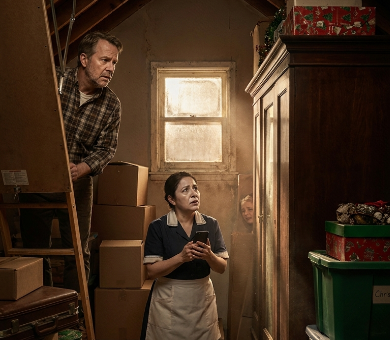
She was surrounded by twelve large, cardboard moving boxes that looked like they had been dragged through mud. She didn’t look like a guest. She looked like she had claimed the territory.
“Happy birthday, dear,” Darlene said, her voice dry and thin.
Gerald came up behind me and squeezed my shoulders. He was beaming, as if he had just handed me the keys to a new life. “It’s a gift, Sarah. The gift of family. Mom is moving in permanently.” I felt the blood drain right out of my face. Darlene had never been a fan of mine. She was the type of woman who would run her finger along a bookshelf to check for dust while you were trying to serve her tea. The thought of living under her constant, critical scrutiny in my own home felt like a physical weight settling onto my chest.
“We talked about this, Gerald,” I said, my voice shaking. “We said we needed space.”
“That was then,” he said, his smile never wavering. “Mom needs us. This is home.”
I didn’t want to start a fight on my birthday. I really didn’t.
I forced a smile that felt like it was made of cracked porcelain and retreated to my office, telling myself I just needed to adjust. The next few weeks were a slow-motion car crash. Darlene didn’t act like a guest at all. She rearranged my kitchen cabinets. She threw away my favorite herbs because she decided they were weeds. She even hired a landscaping crew to dig up the flower beds I had spent four springs cultivating, replacing them with a cold, concrete slab for her afternoon tea.
Every time I tried to talk to Gerald, he shut me down. “She’s had a hard time, Sarah. Just let her have her way. It’s not worth the stress.”
The breaking point arrived on a Tuesday. I was sorting through the mail when I found a property tax assessment addressed to Darlene. It was for our house. I stared at the paper for a long time, trying to find a reason why her name would be on the county record.
When I asked Gerald about it that night, he snatched the envelope right out of my hand. He didn’t even look me in the eye. “It’s a clerical error, Sarah. A mess from when I helped her co-sign a loan years ago. Don’t worry about it.”
But I was worried. I kept thinking about that paper. The tone of his voice was wrong. It was too sharp, too defensive. The next day, while Gerald was at work and Darlene was off at her hair appointment, I didn’t go to my desk. I got in my car and drove straight to the county clerk’s office. I didn’t even call a friend. I just felt like I was walking toward a cliff edge.
The woman at the counter was kind, but she didn’t realize she was handing me the end of my life. She handed over a stack of documents. My hands were shaking so hard I could barely read the print. It was a Quitclaim Deed. It had been filed three years ago, right around the time Gerald and I were in marriage counseling. It stated that the house had been transferred entirely to Darlene. There was a signature at the bottom. It looked like mine, but I had never signed that paper. I realized then that he had forged it, probably with the help of that friend of his who works as a notary.
I stood there in the quiet office, surrounded by the smell of old paper and dust, and I felt the air leave the room. He hadn’t just moved his mother in. He had handed her the deed to the life I thought we were building together. The house wasn’t ours. It was hers.
I drove home in a daze. I realized I couldn’t say anything yet. If I confronted them, I’d be homeless by nightfall. I had to be smart. I had to be quiet. I spent the next two weeks acting like a ghost in my own home. I was polite. I was helpful. I was invisible. While they were busy eating dinner and talking about the future of “their” property, I was quietly moving my essential business equipment to a storage unit. I spent hours at night in the local library, meeting with a lawyer who looked at the forged deed and told me exactly how we were going to claw back my equity.
I needed to know why. I needed to see the rot for myself. I waited until Gerald was out for his regular Friday evening meeting. I went into his office and sat at his desk. My heart was thumping against my ribs like a trapped bird. I didn’t have to look hard. I guessed his password on the first try. It was the name of the dog we had as kids. The emails were right there, sitting in a folder labeled Finance.
The truth was worse than I imagined. He hadn’t just hidden the house to keep it away from me. He had been day-trading with our joint savings and lost over $80,000. Darlene had sold her condo to cover his debt and save his professional reputation. They were in this together. The house was the collateral. My husband was a fraud, and my mother-in-law was his accomplice.
I finished my plan. I opened a new bank account in my own name. I moved exactly half of our remaining liquid assets into it. I gathered every piece of evidence I could find, printing out the emails and the records. I felt a strange, cold calm settle over me. It was like I was watching someone else’s life, someone else’s pain.
The day of the confrontation was a Tuesday, just like the day I found the tax paper. Darlene was hosting her bridge club in the living room. There were four women sitting around the table, sipping tea and talking about the neighborhood gossip. Gerald had come home early for lunch, something he rarely did.
I walked into the living room. I didn’t say a word. I marched straight to the bridge table and dropped a heavy black folder right in the middle of their game. The sound of the plastic hitting the mahogany table made everyone jump.
“What is this, Sarah?” Gerald asked, his face going pale.
“It’s the end, Gerald,” I said. My voice sounded steady, deeper than it ever had before. “I’ve filed for divorce. I’ve also filed a lawsuit for marital asset fraud. You forged my signature, you hid debt, and you stole the equity in this home.”
Darlene gasped, clutching her pearls. “You can’t do this! This is my house!”
“You own the house, Darlene,” I said, turning to look at her. “But you bought it with dirty money and a forged deed. That makes you a co-conspirator. I suggest you call your lawyer before the police show up.”
The room went completely silent. One of the bridge players stood up, her face twisted in shock. Gerald started to stammer, trying to usher them out, but they were already grabbing their purses. The social ruin was immediate. I saw it in their eyes. They weren’t looking at me with pity. They were looking at Gerald and Darlene like they were poisonous.
I didn’t wait for the screaming to start. I didn’t want to hear his excuses or her cries. I had an overnight bag already packed in my car. I walked out the front door, leaving the wreckage behind me. I didn’t look back at the garden or the house or the man I had spent twenty years loving. I felt lighter than I had in a decade.
That evening, I sat on the floor of my new apartment. It was small, but it was bright. The sun was setting, casting long, golden shadows across the wood floor. I reached into my purse and pulled out the tarnished Hawaiian sea-turtle keychain I had reclaimed from Gerald’s desk that morning. It was a souvenir of a trip I had paid for, a trip that was supposed to be a celebration of a life I realized was a lie.
I looked at the keychain for a long time. It felt heavy, but in a good way. I picked up my brand-new key to this apartment and slipped the turtle on. It clicked into place perfectly. I sat there in the quiet, listening to the sound of the city outside my window, and for the first time in a long, long time, I realized that the house didn’t matter. The money didn’t matter. I was finally, truly, my own person again. The peace in the room was absolute. I leaned my head back against the wall and finally, for the first time since my birthday, I allowed myself to just breathe.