The Grace Community Church sanctuary has always smelled like old hymnals and floor wax. It is a scent that sits deep in my lungs, a reminder of forty-two years spent sitting in the third pew from the front, right behind where my Calvin used to hum during the hymns. He had a voice like gravel grinding together, but he loved the music. I suppose that is why the silence hit me so hard when Pastor David told me my time on the building committee was over.
He said it with a smile that never quite reached his eyes, telling me it was time for fresh energy to take the reins. I sat there in my beige Sunday suit, my hands folded tightly in my lap, and I nodded. I nodded because that is what you do when you are seventy-two and the person at the pulpit is thirty-four and smells like expensive cologne.
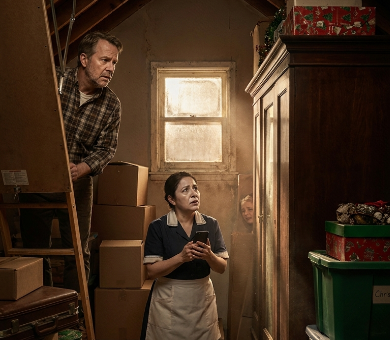
I went home that day and did not make tea. I did not sit on the porch. I went straight to the attic. The attic is where Calvin kept his files, back when he was the one who handled the logistics for the church. We were not wealthy people, but we were the kind of people who believed in stone and mortar. When the church was failing in 1986, when the bank was ready to board up the fellowship hall and turn it into a warehouse, we were the ones who stepped in.
We signed the papers to carry the note on our own home. We sacrificed our savings, our vacations, and our sense of security to keep those doors open. The church promised they would pay us back, but time moves differently in a congregation. Leadership turns over. People forget. I, however, am not the sort of woman who forgets. I found the manila folder under a stack of old Sunday school lesson plans. It was heavy, held together by a thick rubber band that snapped the moment I touched it.
I spent the next three days reading through the documents. It was all there, preserved in yellowed ink and stiff, legal-sized paper. The 1986 promissory note. The payment schedule. And then, at the very bottom, the original Deed of Trust. I had not looked at it in decades. My heart hammered against my ribs when I saw the final page. There was no signature of satisfaction.
There was no release of lien. The church had missed their final balloon payment back in 1991, and in the confusion of the pastor passing away that same year, no one had ever cleared the title. I had been paying the taxes on the building through a blind trust for years, assuming someone else was handling the paperwork. I realized then that David was not just replacing me because I was an old relic. He was replacing me because he knew I would be the only one to stop him.
I started hearing rumors on Wednesday. They were talking about an emergency vote. I drove by the church parking lot and saw them there, a group of men in sharp suits standing around with clipboards, pointing at the fellowship hall. They were measuring the perimeter with laser devices. I stopped my sedan and got out. One of the men, a young fellow named Kevin who had joined the committee six months ago, walked over to me.
He looked uncomfortable. I asked him what was going on. He shifted his weight and told me it was just a standard asset assessment for the new expansion. He would not look me in the eye. I knew then that David was moving to sell the hall. He wanted to bulldoze the place where we held our wedding receptions and our funeral luncheons to make room for a giant broadcast screen and high-tech stage lighting. He wanted to sell our history to a condo developer for two and a half million dollars.
Sunday morning arrived with a biting chill. I wore my best coat, the one I had saved for special occasions, and I tucked the folder inside a leather briefcase. When I walked into the sanctuary, the air felt different. There was a sense of nervous energy, like a storm brewing before the clouds even break. Pastor David was at the pulpit, checking his microphone and adjusting his cuffs. He looked polished. He looked like a man who was ready to announce his legacy. I did not take my seat in the third pew. I walked straight up the center aisle. People started to murmur, their voices rising like a low tide. I reached the pulpit and set the briefcase down. I did not say a word. I just placed the thick manila folder on the wood right in front of him.
David stopped talking. He looked at me, his smile wavering for a fraction of a second. He leaned down and whispered to me. “Ruth, you are out of line.” I didn’t back down. I just looked him in the eye and said, “Read the folder, David.” He tried to laugh it off, turning to the congregation with a practiced, charming shrug. He told them that sometimes the older generation had trouble letting go of the past. He signaled the back of the room, and suddenly, the screens lit up with a glossy 3D rendering of a massive auditorium complex. It looked like a shopping mall. He started his pitch, his voice rising with that artificial, preacherly cadence. He talked about reaching more people, about modernizing, about being relevant in a fast-changing world. He was doing a good job of it, too. I could see the young families nodding, caught up in the promise of something new and shiny.
I stood up. I didn’t wait for him to finish. I spoke loudly, my voice steady despite the way my hands were trembling. I told the congregation that before they agreed to trade their sanctuary for a broadcast center, they should hear the history of the foundation they were standing on. David tried to cut me off. He tried to motion for the ushers to come forward. But the room had gone quiet. Too quiet. People were looking at me, then at him. He realized he was losing the room. He reached down and snatched the folder from the pulpit, probably thinking he could just discard it and get back to his PowerPoint presentation. He opened it, his eyes skimming the top page, clearly expecting a list of grievances or old receipts. He flipped to the second page. Then the third.
His face drained of color. He stopped moving. He stood there for a long time, the silence stretching so thin I thought it might snap. He started to flip back through the pages, his movements jerky and frantic. The room was so still I could hear the hum of the overhead projector. He wasn’t looking at the audience anymore. He was staring at the legal text, his mouth opening and closing like a fish out of water. He looked up at me. He looked terrified. He leaned into the microphone, his voice barely a whisper. “We don’t just owe you money, Ruth.” The congregation erupted into a confused murmur. He stumbled over his next words. “The building. The hall. It isn’t the church’s.”
The room broke into chaos. The developer representatives in the front row stood up, their faces turning red. They started shouting, demanding to know what he was talking about. I took the microphone from his hand. It was heavier than I expected. I looked out at the faces of my neighbors, the people I had prayed with for decades. I told them that a church is not a broadcast center. It is not an asset to be sold for profit. It is a place where we bring our brokenness and our joys. I told them that as the legal owner of that property, I was refusing to sign the quitclaim deed. I told them the sale was off. The developers cursed under their breath and stormed out the side doors, their briefcases clacking against the pews. David sank into the chair behind the pulpit, his head in his hands.
The next few weeks were a blur of lawyers and frantic meetings. David tried everything to get me to change my mind. He sent his assistants to my house. He called me at all hours of the night. He begged, he threatened, he pleaded. He told me that his career would be over if the deal didn’t go through. He told me that I was destroying the future of the church out of spite. I listened to him, but I never once wavered. I knew what I had to do. I drew up the lease agreement myself, with the help of a lawyer friend who understood the importance of small things. I leased the fellowship hall to a local coalition for the homeless. For one dollar a year.
The transition was not easy. There were members of the congregation who were angry, people who wanted the shiny new auditorium and didn’t care who had to lose their legacy to get it. They left, mostly. But a funny thing happened. The people who stayed started showing up to help. We cleared out the old storage rooms. We built a pantry. We started cooking on Tuesday nights. The church building that was supposed to be a broadcast center became a kitchen. It smells like onions and carrots now, instead of stale coffee and industrial cleaner.
It is a cold Tuesday night, the kind that bites through your coat the moment you step outside. The fellowship hall is packed. We have about forty families coming through tonight for a hot meal. The steam rises from the giant vats of chicken soup, clouding the air in a way that feels like a warm embrace. I am at the ladle, serving bowls, watching the children eat until their faces are messy. I feel tired, a deep, bone-weary kind of exhaustion that I haven’t felt in years, but it is a good tiredness. It is the kind of tired that comes from doing work that actually matters.
I glance toward the back of the room. The kitchen door swings open. Pastor David steps out, holding a tray of dirty dishes. He isn’t wearing his slim-fit suit anymore. He is wearing a stained, oversized apron over a plain white shirt, his sleeves rolled up to his elbows. He looks different. He looks like a man who has had the vanity scrubbed out of him. He walks over to the industrial sink and starts rinsing the plates, his movements methodical and quiet. He doesn’t look at me. He just keeps scrubbing, his shoulders hunched slightly against the cold draft from the door. I watch him for a moment, the heat of the soup warming my hands. I turn back to the line of people, and I start to serve the next bowl.