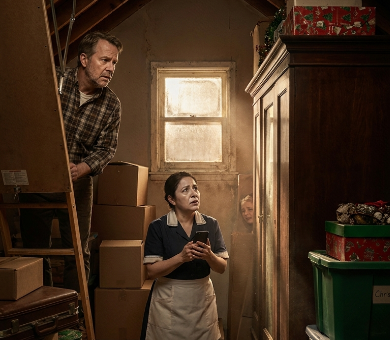
The Bluebonnet Café wasn’t just a place to eat. It was a machine, a living, breathing thing that required constant tending. For twenty-six years, I was the one who tended it. I knew the specific, stubborn rhythm of the 1950s espresso machine that required a firm tap on the left side before it would pull a shot. I knew the exact temperature of the walk-in cooler that fluctuated if the back door was left open for more than ten seconds.
I was the one who kept the Ledger of the Line. It was a beat-up, spiral notebook that sat in my locker, filled with scribbled notes on plumbing, electrical quirks, and the specific dietary needs of everyone from the local sheriff to the regional health inspector.
Then came Ashton. She arrived in March, carrying her father’s checkbook and a vision for a viral lifestyle brand. She didn’t want a café. She wanted a set piece.
“The remodel includes staff, sweetie,” she told me during our first meeting. “Nobody Instagrams a waitress with orthopedic shoes and a hairspray helmet. You’re the ‘before’ picture, and we’re an ‘after’ kind of place now.”
She fired me on a Tuesday afternoon. She did it right in the middle of the dining room, while the teenagers were clearing tables and the lunch crowd was still nursing their coffee. She wanted an audience. She wanted everyone to see that the old way was officially dead.
I didn’t cry. I didn’t argue. I just went to my locker, cleared out my personal effects, and walked out the door for the last time. My pride was the only thing I had left, and I was going to keep it.
I spent the next few days sitting in my living room, staring at my hands. They felt heavy, like they didn’t know what to do with themselves. I kept catching myself reaching for a pot of coffee that wasn’t there. Marv, the retired mailman who had been sitting in my section every morning since 1999, called me twice. He was furious. He wanted to organize a boycott, a protest, something. I told him no. I told him to let it go. I figured the new world was just faster and colder than the one I had built, and I had no place in it anymore.
But then I remembered the ledger. It was still in my locker, tucked behind a spare uniform.
I went back on Thursday, just to grab it before the cleaners tossed everything. Flipping through those pages felt like reading the diary of a ghost. I saw notes about the grease trap that had been installed in 1958, a temperamental piece of iron that needed a specific, manual bypass balance every three hours when the kitchen was at full capacity. I looked at the diagrams of the electrical grid, which was wired in a way that defied modern code but somehow kept the lights on, provided you didn’t run the deep fryers and the coffee makers on the same circuit during a peak load.
Ashton’s contractors had been in the building all week. I saw them from the street, hauling out old fixtures and covering walls in reclaimed shiplap. They were covering the emergency access panels. They were sealing the ventilation bypass behind decorative wood paneling. They were building a beautiful, digital, automated trap, and they had no idea what was beneath the surface.
I sat there on my kitchen floor, the ledger open on my lap. If I said nothing, the whole place would fail on Sunday morning. It was a mathematical certainty. The grand reopening was scheduled for Sunday brunch, the busiest shift of the year. The town’s elite would be there. The health inspector, Arthur Pendelton, would be there. And the system wouldn’t hold.
I thought about the kitchen staff. I thought about the line cooks who had busted their backs for me for a decade. If the café failed, they’d be the ones out of a job, not Ashton. She’d just walk away and find another property to ruin. That was the part that finally made me move. It wasn’t about the job, and it wasn’t about the café. It was about the people who had kept the machine running.
I didn’t sleep Saturday night. I lay in bed, listening to the hum of the heatwave outside. The town was sweltering, and the power grid was already strained. I knew the Bluebonnet’s fragile, unvented system would crack under the pressure of Sunday brunch. It was a perfect storm of bad planning and sheer, unadulterated hubris.
I arrived at the café at 4:40 AM on Sunday. The air was still thick and stagnant. The front door was locked, but the back was propped open with a heavy brick. I walked inside and felt the shift immediately. The heat in the kitchen was intense, trapped by the new, airtight shiplap walls. The power was flickering, a rhythmic, nauseating pulse. I heard a low, metallic gurgle coming from the drains. It was the sound of a system about to give up the ghost.
Ashton was in the center of the kitchen. She looked like a ghost herself, her expensive dress stained with something dark and smelling of old grease. She was sobbing, her hands pressed against a wall where the emergency access panel used to be. The automated alarms were chirping, a shrill, incessant noise that cut through the silence of the morning.
“What did you do?” she screamed when she saw me. She didn’t even look surprised. She just looked terrified.
I didn’t answer. I walked over to the prep table and placed the ledger down. It looked small and insignificant against the gleaming, new stainless steel.
“The system is backing up,” I said. My voice sounded steady, a sharp contrast to her panic. “The grease trap is locked, and the electrical load is peaking. In twenty minutes, the circuit will blow, and the plumbing will vent into the dining room. Arthur Pendelton will be here for his inspection in fifteen minutes. If he sees this, he’ll close you down for good.”
Ashton stared at the ledger. She looked at the walls, then back at me. The bravado she had used to fire me was gone, replaced by a raw, desperate need to survive.
“Fix it,” she begged. She actually lunged for my arm, her fingers clawing at my sleeve. “Fix it, and you can have your job back. Double the pay. I don’t care. Just make it work.”
I shook her off. I didn’t want the job. I didn’t want the money. I wanted the dignity I had earned over twenty-six years, and I wanted to make sure she understood exactly how much she had underestimated the world she was trying to conquer.
“I’m not fixing it for a job,” I said. “I’m fixing it because the staff doesn’t deserve to lose their livelihoods because of your ego.”
I reached into my bag and pulled out a manila envelope. It contained the paperwork I had spent all night drafting with the help of a friend who knew about these things.
“I’ll clear the line,” I said, holding up the papers. “But you’re going to sign these first. It’s a full transfer of the Bluebonnet name and the historic sign rights to the Oakhaven Historical Society. You’ll also sign a guarantee for two years of severance for every cook and busboy, and you’ll write a public, recorded apology for how you handled the transition.”
She looked at the papers, her face twisting in fury. “You can’t do this. This is extortion.”
“It’s an exchange,” I said. “You’re buying the survival of your investment. You can sign, or you can watch the health inspector walk through that front door and lock these doors for the next six months.”
The alarms kept chirping. A pipe overhead let out a sharp hiss, and a spray of grey, stagnant water hit the floor. The smell was getting worse. She looked at the door, then at the clock. She knew she was out of time.
“Fine,” she whispered. She grabbed a pen from the counter and signed the papers, her hand shaking.
I didn’t wait. I took the documents and tucked them into my apron. I grabbed a heavy iron wrench from my bag and walked to the wall behind the grease trap. I knew exactly where to hit. I struck the shiplap in a specific, hidden spot, and the decorative paneling popped open to reveal the rusted, ancient access valve. I turned it, a hard, grinding motion that sent a vibration through the floor. The alarms cut out. The gurgling in the drains stopped. The lights stopped flickering and settled into a steady, bright glow.
The silence that followed was heavy. The kitchen breathed again.
“It’s done,” I said.
I didn’t look at her. I turned around and walked out the back door, leaving the ledger on the table. As I walked to the front, I saw a line of regulars stretching down the block. Marv was at the front, his face full of worry. He looked at me, then at the café, then back at me. He could tell by the way I walked that it was over.
I didn’t say a word. I just nodded. That was all the signal he needed.
I walked past them, my head held high. I felt lighter than I had in months. My name tag was tucked deep in my purse, a souvenir of a life I no longer needed to carry. I reached the truck where Marv was waiting. I climbed into the passenger seat and closed the door.
We sat there for a moment in the morning light. I looked back at the café one last time. The neon sign was still buzzing, but the storefront felt empty. It had lost its heart, and the people who knew the difference were already turning their cars around.
“Ready?” Marv asked, his hand on the ignition.
“Yeah,” I said. “Let’s go.”
We drove away as the regulars followed us, leaving the beautiful, nameless shell of a building behind. The Bluebonnet was gone, but for the first time in twenty-six years, I was exactly where I needed to be.