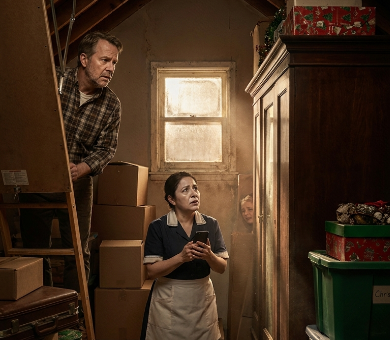
The mop bucket wheels always squeaked in a rhythm that matched my heartbeat. It was a sound I knew better than my own voice. For twelve years, the halls of Oakridge Middle School had been my home, my territory, and my burden. I knew which lockers stuck, which tiles were loose, and most importantly, which kids didn’t have enough to eat when the final bell rang on Friday afternoons.
It started small. Back then, there were only two of them. They were siblings, quiet as mice, always hovering near the vending machines without a dime to their names.
I started packing an extra sandwich in my lunch, then an extra fruit cup, then a granola bar. I never meant to start a crusade. I just wanted to make sure they wouldn’t spend their weekends with hollow bellies.
By last year, I was managing eight bags every single Friday. It cost me about $6,200 over the years, counting the bulk groceries and the occasional fresh carton of milk. I kept the receipts in a shoebox, not for taxes, but as a silent tally of the lives I was helping hold together. I told myself it was just a little extra kindness. I told myself nobody noticed.
“Martha, my office. Now.”
Principal Arthur Sterling didn’t even look at me when he said it. He was standing by the trophy case, his reflection distorted in the glass. It was a Thursday. The air in the hallway felt heavy, stale, and hot, like the building was holding its breath.
I felt a cold prickle of dread crawl up my spine. I had been careful. I was always careful.
I followed him to the main office. The secretary, a woman who usually had a kind word, stared fixedly at her computer screen. She wouldn’t meet my eyes. That was when I knew.
The hearing was scheduled for the following Monday. They didn’t fire me on the spot, but they put me on administrative leave, which was just a polite way of saying I was already dead to the school district. They escorted me to my locker, watched me clear out my personal photos and my heavy winter coat, and then walked me to the front doors as if I were a common thief.
“Liability,” Sterling said, his voice smooth and devoid of any human warmth. “It’s about the liability, Martha. You’re putting this district at risk.”
I wanted to spit at him. I wanted to tell him that the only risk here was the risk of a child fainting in the hallway from hunger, but I stayed quiet.
I knew how these people worked. They lived for protocols and insurance riders. They had denied my formal request for a school-run food pantry three times in the last decade, citing “unforeseen insurance complications.” I had learned to stop asking and started doing.
I spent the weekend in my small apartment, the silence loud enough to make my ears ring. I kept thinking about Toby Miller. He was a sixth-grader, small for his age, with eyes that seemed to look right through you. He was one of the eight. I had left his bag in his cubby just before Sterling caught me. He hadn’t even had a chance to get it.
On Monday morning, I went back to the school. I had a right to collect my remaining supplies from the custodial closet, and I wasn’t going to let them keep my good work gloves. The school was quiet, the staff already in meetings.
I walked down the hallway, the rubber soles of my shoes squeaking on the polished linoleum.
I stopped by the large recycling bin in the lobby. It was a habit. I always checked to make sure the kids weren’t throwing away anything useful or leaving messes. There, sitting right on top, was a crumpled foil juice box. It was the same brand I bought in bulk.
I reached out to pick it up, intending to toss it in the bin, but my hand stopped mid-air. It was heavy. Too heavy. Empty juice boxes are light, almost airy. This one had a dense, solid weight, like a stone wrapped in foil. I turned it over in my palm. The bottom edge, usually sealed tight, had been sliced with a razor blade and then taped back together with a sliver of clear, waterproof tape.
My heart hammered against my ribs. I looked around. The lobby was empty. I ducked into the nearby supply closet, the smell of pine cleaner welcoming me like an old friend. My hands were shaking so hard I almost dropped my utility knife. I pried the tape loose and pulled.
Out slid a tight, thin roll of paper. It wasn’t just paper. It was high-density, professional-grade financial ledger stock. I unfolded it slowly, my breath hitching in my throat. It was a federal grant report. My eyes blurred for a second, then cleared.
It was an unredacted list of Title I funding allocations for the entire district. I saw the categories: “Student Nutritional Assistance,” “After-School Enrichment,” and “Emergency Resource Distribution.” Beside each one were numbers that made no sense. Millions of dollars. And then, at the bottom, a series of outgoing transfers to a private consulting firm called “Vance & Associates.”
I sat on the floor, the cold tile pressing against my back. My brain felt like it was rewiring itself. I remembered the year my first proposal for a food pantry was rejected. That was the same year this “consulting firm” appeared in the ledger. They hadn’t rejected me because of liability. They had rejected me because the money was already gone. They needed the hunger. They needed the school to look poor enough to keep the federal grants flowing, even if the money never actually reached the kids.
Toby’s mother had worked in data entry for the district office. She had been fired six months ago for “system errors.” I felt the weight of the juice box in my hand, a piece of evidence that could burn the entire district to the ground.
The hearing was in the boardroom at 1:00 P.M. I walked in with the juice box hidden in my jacket pocket. Superintendent Cheryl Vance sat at the head of the table, her face a mask of bureaucratic indifference. Principal Sterling sat to her right, looking smug. He had a file folder open in front of him, ready to dismantle my reputation.
“Martha Jenkins,” Vance began, her voice crisp. “You are here to address charges of insubordination and unauthorized distribution of food products on district property.”
“I was feeding children who were hungry,” I said. My voice sounded thin, but it didn’t tremble.
“We have established protocols,” Sterling interrupted, his eyes cold. “Protocols that you knowingly violated. You are a custodian, Martha. You are not a nurse, you are not a social worker, and you are certainly not a policy maker.”
“The policy seems to be starving them,” I replied.
Sterling scoffed, shifting his gaze to the board members. “See? She refuses to accept the gravity of her actions. I move for immediate termination and a formal report to the state licensing board to ensure she cannot be employed by any other district in Ohio.”
I stood up. My movement was slow, deliberate. I didn’t reach for my keys. I didn’t reach for the apology letter I had been told to write. I walked to the front of the room, to the console where the smart projector was hooked up.
“What are you doing?” Vance asked, her voice sharpening.
“I’m finishing my report,” I said.
I pulled the ledger printouts from the juice box and slid them into the scanner, then dragged the digital images onto the main screen. The boardroom erupted. The ledger wasn’t just a list; it was a map of theft. Every single “Consulting Fee” was linked to a specific Title I grant, and the signatures on the bottom were clearly those of Superintendent Vance and her brother-in-law, who ran the firm.
“This is a breach of private, sensitive information,” Vance hissed, rising from her chair, her face turning a blotchy, ugly shade of red. “Sterling, cut the power! Security!”
“I already sent the originals to the State Auditor,” I said, my voice ringing through the room. I looked at the school board members. Their expressions were shifting from confusion to cold, hard fury. “The liability isn’t the food, Superintendent. The liability was the paper trail.”
Sterling tried to reach for the power cord, but the union representative stepped in his way, grabbing his arm. “Don’t touch a thing, Arthur,” the rep said, his voice deadly quiet. “I think we’re all going to want to see the rest of this.”
The room became a blur of shouting and phones dialing. I didn’t move. I stood by the projector, watching the numbers shift and reveal the hollow core of our school’s leadership. It felt like the air in the room was being sucked out, leaving only the truth behind.
Within forty-eight hours, the district offices were crawling with state agents. I didn’t see Vance or Sterling again. They were escorted out in the middle of the night, their belongings packed in cardboard boxes, just like mine. The board held an emergency meeting, but it wasn’t about firing me. It was about cleaning up the wreckage.
Two months later, the sun was hitting the cafeteria floor in long, golden stripes. It was a Friday. 2:30 P.M. The school was quiet, a different kind of quiet than the oppressive silence of the district office. It was the quiet of a place finally catching its breath.
I stood by the rolling cart. It was loaded high with eighty green bins. They were official, branded with the school district’s logo, and filled with fresh fruit, milk, and high-quality meals. No more brown paper bags. No more hiding in the closet.
I saw Toby walking toward the cafeteria doors. He was carrying his backpack, looking taller than he had two months ago. He stopped when he saw me. He didn’t say anything, just gave a small, slow nod. He reached into his pocket, pulled out an empty juice box, and held it up for a second before dropping it into the recycle bin.
I nodded back. The work was done, but the kids were still here. I looked out at the sunny playground and felt a strange, quiet peace settle over me. It wasn’t the kind of peace that comes from winning. It was the peace of knowing that for the first time in nine years, I didn’t have to carry the weekend all by myself. I turned toward the cart, ready to finish my shift.