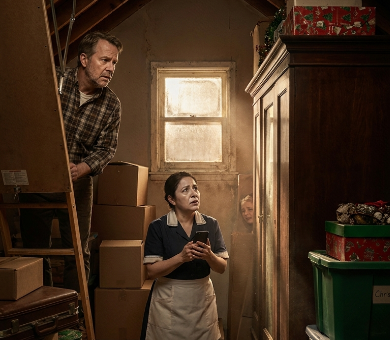
The notification on my phone screen was just a simple bank alert. 3 overdraft fees, $105 total. I sat there in the driver’s seat of the black town car, staring at the numbers until they blurred. When you have three kids and a mountain of bills, pride becomes a luxury you simply cannot afford. I took the job driving Mrs. Evelyn Whitmore because it paid, not because I wanted to be a part of her world. She was a wealthy widow, seventy-four, living in a sprawling estate behind iron gates. I expected her to be cold and detached. I was wrong.
At first, the job was strictly business. I drove her to the bank, the pharmacy, and the cemetery every Friday afternoon. She’d spend exactly twenty-two minutes at her husband’s grave, placing white roses on the marble. But over three years, the barrier between the front and back seat softened. She started asking about my kids. “Do they look like you, Stan?” she would ask, her eyes meeting mine in the rearview mirror. “Do they know how hard you work?”
Sometimes, after the long Friday drives, she’d invite me in for coffee. I always sat on the edge of the chair, trying to keep my distance. She’d talk about her late husband and the crushing silence of that massive house. She talked about her four grown children who only showed up when they needed a check signed. She saw the exhaustion in my face, and I saw the isolation in hers.
We were two different people, but we both knew the weight of carrying a burden alone.
The routine broke on a crisp Tuesday. I pulled the town car up to the portico ten minutes early. I expected Mrs. Whitmore to come out for her appointment. Instead, the oak doors slammed open, and her eldest son, Richard, marched down the steps with two security guards. Behind them, Mrs. Whitmore stood in the foyer, her face a blank slate.
Richard didn’t even say hello. He threw open my driver’s side door and shoved a paper into my chest. “Get out of the car, Stan,” he roared, his voice echoing across the lawn. “My mother’s diamond ring is missing. You were the only one in the house this morning. The police are on their way. You’re fired for grand larceny.”
My stomach dropped into my shoes. I looked past him, locking eyes with Mrs. Whitmore.
I expected her to speak up, to tell him he was crazy, to tell him I was family. She just crossed her arms and looked away. That was the moment the floor fell out from under me. I assumed she was just another wealthy elite, covering up her own dementia-related memory loss by tossing me to the wolves.
The security guards dragged me to the gates. They wouldn’t let me take my logbook or my coat. They told me the car was a crime scene. But as I stood there in the cold, watching them, I noticed something that didn’t add up. Richard didn’t call the police. He ordered the guards to drive the town car to a private detailing shop he owned downtown. If a driver really stole a ring, you hold the car for the cops. You don’t dismantle it in a private garage.
I didn’t go home. I couldn’t. I used the spare key Mrs. Whitmore had given me a year ago, the one Richard didn’t know existed.
I tracked the car to the holding lot. The night watchman was gone, so I slipped under the chain link and got inside the cabin. I searched every inch. I tore through the console and the floor mats. Nothing. I was about to give up, my hands shaking with pure fear, when my fingers caught on a loose seam behind the sun visor.
I pulled. A folded piece of thick, heavy stationery came free. It wasn’t registration. It was a note, written in her elegant, shaky cursive. “Stan, if you are reading this, my children have called the police, just as I knew they would. Do not look for the ring. It is in a safety deposit box they cannot touch. Read this carefully. Your family and my legacy depend on your silence.”
My heart hammered against my ribs as I read. Mrs. Whitmore had found out that Richard and his siblings had secretly filed to have her declared incompetent. They wanted to seize her $40 million estate by the end of the month. She knew her house was bugged, her phones monitored. The only place she had left was the car. The theft accusation was a performance. It was the only way to get me away from them, to keep me out of their reach while she moved her assets.
The note told me exactly where to look. Taped under the spare tire in the trunk was a heavy safe-deposit key and a power of attorney naming me as the executor of her private, un-monitored charitable trust. It held $4 million in liquid assets. If I went to the police, I’d be safe, but Richard would find the key and destroy her. If I took the job, I’d be a fugitive until I could reach the bank and the attorney she’d been working with in secret.
I took the key. I left the car exactly as I found it. Over the next twelve hours, I felt like I was living in a movie I hadn’t auditioned for. I met the attorney in a dark parking lot near the cemetery, a man who had been disguised as a groundskeeper for months, collecting evidence while Richard’s security team was busy spying on their own mother.
At 9:00 A.M., the showdown happened at the First Commercial Trust. Richard walked in with his siblings, expecting a payday. I was already sitting at the table with state investigators and the lawyer. When Richard started yelling for the police to arrest me, the bank manager just sat back. The lead investigator held up a stack of documents.
“Richard,” the attorney said, his voice calm, “Your mother never lost that ring. But you just lost the estate.”
They played the video files she’d recorded in the backseat of my town car during our Friday drives. They played the audio of Richard bragging about his corporate fraud. They presented the medical reports proving she was perfectly sane. It wasn’t even a contest. The police didn’t handcuff me. They handcuffed Richard.
The next few weeks were a blur of lawyers and courtrooms. Mrs. Whitmore disinherited all four of them. She didn’t leave them a dime. She used the restructuring to fund the charity she had always dreamed of, and she made me the manager. The overdue bills on my kitchen table? Gone. The fear that kept me awake at 4:12 in the morning? Gone.
Two weeks later, the Friday sun was hitting the cemetery just right. I pulled up to the curb. I got out and opened the back door for her. She stepped out, holding a single white rose. She looked at me, a soft, genuine smile on her face. She didn’t need to ask if my kids were okay. I knew they were. I looked down at the simple silver keychain she’d given me, engraved with the words: For the miles walked in truth. It cost me everything to play that part, but I finally realized that some things are worth the price of admission.