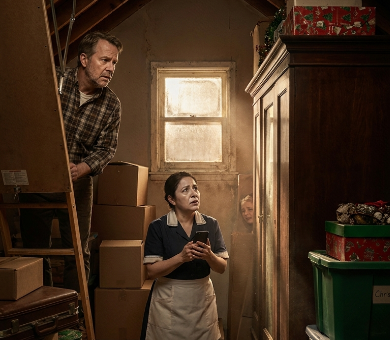
The juice box felt wrong the moment I picked it up. It was heavy, rigid, and it had been sliced open at the bottom seam before someone taped it back together with thick, clear packing tape. I spent twelve years as the head night custodian at Oakridge Middle School, and I know exactly what an empty juice box feels like. They are light, hollow, and they usually end up in the trash bin with a little bit of sticky residue inside. This one was different.
I was standing in the dim light of the janitor’s closet, surrounded by the smell of floor wax and industrial pine, when my fingers brushed against it. It was 3:45 P.M. on a Friday, just an hour before my disciplinary hearing was scheduled to begin in the district office. My hands were already shaking from the stress of it all. I had been handed a notice of termination three days earlier for unauthorized food distribution. For nine years, I had been paying for and tucking small, brown paper bags into the lockers of eight specific students who I knew were going hungry over the weekends. The district said it was a liability issue. I knew it was just an excuse to get rid of a woman who saw too much.
I took my utility knife out of my back pocket and carefully sliced the tape on the juice box.
I didn’t know what I expected to find. Maybe a note from a kid, or a drawing. Instead, a tight roll of high-density paper slid out. It was a printout of the school’s federal grant ledger for the Title I nutritional program. My heart did a slow, painful thud against my ribs as I smoothed it out on the utility sink. My eyes jumped over the columns and the dates. The numbers didn’t make sense at first. They made too much sense.
The hearing was held in a boardroom that felt like a courtroom. It was quiet, cold, and smelled like expensive coffee and floor polish. Superintendent Cheryl Vance sat at the head of the table, looking like a statue. Principal Arthur Sterling sat to her right, his tie so straight it looked like it was part of his skin. He didn’t even look at me when I sat down. He just started reading from a stack of papers.
“Ms. Jenkins, your persistence in bypassing district protocols has resulted in a serious breach of health and safety standards,” he said, his voice flat and practiced. “We gave you a direct order to cease your activities three years ago. You chose to ignore it. The board has no choice but to terminate your contract effective immediately.”
I didn’t answer right away. I looked at the spreadsheet in my lap, tucked beneath my sweater. The dates of the diverted funds lined up perfectly with the date they had officially rejected my formal proposal for a school food pantry. They told me it was because of liability. They told me they were worried about lawsuits. But the ledger showed that $140,000 had been moved into a private consulting firm account on those exact dates. A firm owned by the superintendent’s brother-in-law.
“I asked for help,” I said, my voice sounding louder than I intended. “I asked for a pantry so these kids wouldn’t have to wait for me to sneak them a sandwich in a brown bag.”
“That is irrelevant to the charge of insubordination,” Sterling snapped.
“Is it?” I asked. I stood up. My knees felt weak, but my resolve was solid. “I think the liability wasn’t the food, Mr. Sterling. I think the liability was the paper trail.”
I didn’t wait for them to tell me to sit down. I walked to the front of the room where the projector console was located. I had my personal phone in my hand, and I had already scanned the pages from the juice box during the ten minutes I had in the parking lot before the hearing. I plugged my phone into the system, my hands moving with the grace of someone who had spent twelve years cleaning every corner of this building. I hit the button on my screen.
The room went silent as the ledgers flickered onto the massive wall-mounted screen. It was all there. The dates. The names of the accounts. The missing Title I funding. The signature of the superintendent on every single transfer request.
“What is the meaning of this?” Vance stood up, her face turning a color I hadn’t seen on her before. It was a mix of shock and pure, unadulterated fear. “Where did you get that?”
“It doesn’t matter where I got it,” I said, feeling a strange, cold calm settle over me. “It matters that the state auditor is going to have a lot of questions about why the money meant for weekend lunches for underprivileged students ended up in a consulting firm.”
“This is an illegal breach of privacy,” Sterling yelled, moving toward the front of the room. He looked like he was about to jump on me to stop the projection. “Those files are forged! Security, get her out of here!”
But the union representative stood up, blocking Sterling’s path. He was a man named Dennis, and he had been quiet for most of the hearing. Now, he was looking at the screen with an expression of cold fury. “I think we should let the lady finish, Arthur,” he said.
“I already sent the originals to the state auditor’s office,” I said, addressing the room. I felt the weight of nine years of brown bags, thousands of dollars of my own money, and the faces of every hungry child I had watched grow up in this district. “I didn’t want this. I just wanted those kids to have a sandwich on a Saturday. But you decided they were an expense you could skim off the top.”
Sterling stopped. He looked at the board members. Their faces were mirrors of his own panic. One by one, they started looking at the screen, then at each other. The room felt like it was shrinking. The air was heavy with the smell of old, trapped secrets finally being dragged out into the light.
“We need a recess,” Vance whispered. She tried to maintain her posture, but she looked like she was about to collapse.
“There won’t be a recess for you,” I said. “The police are already in the parking lot. I didn’t just send the files to the auditor. I sent them to the local press, too.”
That was the part that broke the dam. Sterling sank into his chair, covering his face with his hands. Vance didn’t even look at me. She just stared at the screen as if she could burn the evidence away with her eyes. The union representative stepped toward the table and tapped his pen against the wood. “I think the termination proceedings for Ms. Jenkins are officially off the table,” he said. “And I think we have a much bigger problem to discuss.”
The next few days were a blur of flashing lights and men in suits carrying boxes out of the district office. It was like watching a house of cards finally fall over. The news report hit the local station on Monday morning. By Tuesday, Vance and Sterling were in custody. The state auditor found records of even more money being stolen from other programs, but the core of it, the stuff that hurt the most, was the Title I funds. They were using the hunger of children as a piggy bank.
I went back to work on Wednesday. The school felt different. The air didn’t smell like fear anymore; it just smelled like school. Kids were laughing in the hallways, and the teachers seemed lighter, like a heavy weight had been lifted from the entire building. The board members came to see me in the cafeteria. They offered me a raise, an apology, and a formal commendation. I didn’t care about the raise. I didn’t care about the commendation.
Two months later, it was a Friday afternoon. The sun was coming through the cafeteria windows, making the whole place glow. It was 2:30 P.M. The school bus engines were starting to hum outside, ready to take the kids home.
I was standing in the middle of the cafeteria, not hiding in a closet. I had a team of volunteers with me. We had eighty heavy-duty, insulated green bins lined up on a cart. Each one was packed with fresh, healthy food. There was fruit, bread, milk, and enough supplies to get every single child I had been worried about through the weekend.
Toby Miller walked by with his backpack. He stopped when he saw me. He didn’t say anything, just gave a small, quick nod. He knew. He knew what he had done. He knew that little juice box had changed everything. He walked toward the bus, his head held a little higher than it had been two months ago.
I looked at the bins and felt a peace I hadn’t known in nine years. I wasn’t doing it alone anymore. And I knew, for the first time, that those kids were going to be okay. I took a deep breath of the afternoon air, watched the last bus pull away, and started pushing the cart toward the pantry room. We had a lot of work to do. And for once, it was work that mattered.