I always thought that if you kept your head down and your floors clean, the world would eventually leave you alone. I have worked at Oakridge Elementary for twenty-two years, and for the last nine of those, I have been a thief. Or at least that is what Principal Arthur Sterling called me when he sat me down in that suffocating conference room last Friday. He looked at me like I was a common criminal, like I had been stealing computers or selling secrets, not just making sure eight little souls had a turkey sandwich and a juice box to get through the weekend.
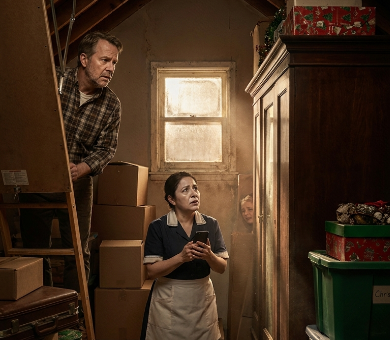
It was 2:40 PM when everything fell apart. I was in Room 204, slipping two of my brown paper bags into the bottom of the backpacks belonging to the Miller siblings. They live in that motel off the highway, the one where the heat only works half the time. The door to the supply closet creaked, and there stood Laura Mendes. She is new, all sharp edges and stiff posture, the kind of teacher who reads the employee handbook for fun on her lunch break. She didn’t say a word at first, she just stared at the bag in my hand. Then she snatched it.
“This is against protocol, Evelyn,” she said, her voice shaking with that self-righteous energy only a new hire has.
I didn’t argue. I didn’t even try to explain. I just felt my stomach drop, not because I was scared for myself, but because I knew those kids wouldn’t have anything to eat until Monday morning.
She didn’t wait for a conversation. She marched straight to the front office, and by the time I finished mopping the cafeteria, I had a summons on my locker.
The hearing was held on Monday. The air in that room smelled like lemon-scented floor wax and decades of bad decisions. Principal Sterling sat at the head of the table, his fingers steepled, looking like a man who was doing the world a favor by cleaning up a mess. He didn’t look at me. He looked at the termination paperwork he had laid out, a pristine white sheet that seemed to mock the years I had put into this building.
“Evelyn, you have been a reliable employee for a long time,” Sterling started, his voice dripping with that fake, condescending sympathy that makes my skin crawl. “But you chose to ignore the liability warnings. You chose to act as a vigilante.
Do you have anything to say for yourself before I sign this?”
He didn’t want an answer. He wanted a confession so he could sleep better at night. But he had forgotten something. He had forgotten that I am a custodian, and we see everything. We see the secrets tucked away in the back of the files, and we keep track of the things that don’t add up.
“I didn’t act as a vigilante,” I said, my voice sounding steadier than I felt. “I acted because you wouldn’t.”
Sterling looked up then, his eyebrows arching in a way that signaled he was already bored. “The district has strict policies on food distribution. We are a school, not a charity. Liability is our number one concern.”
I reached into my bag and pulled out a manila envelope. It was battered, the edges frayed from sitting in my home filing cabinet for nearly a decade.
I slid it across the mahogany table. It was the carbon copy of the District Resource Integration Proposal I had submitted nine years ago. I had spent weeks on it back then, outlining exactly how we could set up a weekend pantry for the students who were clearly struggling. It was all there, every signature, every stamp.
Sterling picked it up, his face losing its color as he turned it over. There, in bold red ink, was his own stamp: DENIED: LIABILITY RISK.
“You knew,” I said, keeping my voice flat. “You knew nine years ago that these kids were showing up on Monday mornings hungry, and you decided that the risk of a lawsuit was more important than their health.”
He tried to brush it off. “That was nine years ago, Evelyn. Policies have changed. You are in violation of current mandates, and that is what we are here to discuss. This paper doesn’t change the fact that you stole school resources to feed students who were not under your care.”
He didn’t realize how much he had just given away. He thought he was winning, but he was just digging the hole deeper. He was so worried about me being a liability that he hadn’t stopped to think about what would happen if the public found out he had been denying food to children while sitting on a pile of wasted resources.
Just as he reached for his pen, the door opened. Clara, the head cafeteria manager, walked in. She wasn’t supposed to be there, and she didn’t look like she was there for a friendly chat. She was holding a stack of green inventory ledgers, the ones that usually stay hidden in the back office.
“Arthur, we need to talk about the waste logs,” Clara said, not even glancing at me. She dropped the books on the table with a heavy thud.
The room went silent. Sterling looked at the ledgers, then at me, and then back at the door. He knew exactly what was in those books. He knew that for years, he had been ordering double the food required for our enrollment to keep his budget subsidies high, knowing full well that a massive percentage of it would be sent to the dumpster every Friday afternoon.
“Clara, this is a private disciplinary matter,” Sterling hissed, his face now a mottled shade of red.
“It’s not private anymore,” she replied, her voice cold. “I’ve been tracking the waste for three years, and I’ve been watching Evelyn buy her own food for nine. You’ve been charging the state for meals you never served, and you’ve been throwing away perfectly good food because you were too scared to admit that these kids needed it.”
I looked at Sterling. He looked small. The power he thought he had in this room was evaporating, replaced by the very real possibility of a state audit. He looked at the termination papers, then at my proposal, then at the waste logs. He was trapped, and he knew it.
“I won’t sign that,” I said, standing up. “And you aren’t going to fire me. In fact, you are going to help me set up the program I proposed nine years ago.”
He opened his mouth to protest, but I didn’t let him.
“If I walk out of here and I am still terminated, these documents go to the county oversight board by 5:00 PM,” I continued. “I have the receipts for every sandwich, every apple, and every juice box I’ve bought since 2015. I have your signature on the denial. And Clara has the logs. The press will have a field day with the story of a principal who chose to throw food in the trash while his students went hungry.”
The silence in the room was heavy. Sterling looked at the HR rep, who was pointedly staring at the wall, clearly wanting to be anywhere else. The game was up. He had spent years playing it safe, avoiding risks, and keeping the district’s reputation clean, and now he was looking at the very thing he had feared most: a public disaster.
“What do you want, Evelyn?” he finally whispered.
“I want the school to sanction a community-led weekend pantry,” I said. “We use the surplus food that is currently going to the dumpster. We operate under a standard parental liability waiver. And I stay on as the coordinator, with my record cleared of this entire incident.”
He didn’t argue. He didn’t even try to negotiate. He just nodded, his shoulders slumping as he realized he had lost.
The rest of the week was a blur of paperwork and hushed meetings. By Thursday, everything was signed. My disciplinary record was scrubbed, and the new program was officially authorized. It felt strange to see it all happen so quickly after nine years of hiding in the shadows, but I didn’t have time to dwell on it. I had work to do.
This past Friday, at 2:30 PM, I didn’t go to the supply closet. I walked into the old home economics room, which had been cleared out and repurposed as our new pantry. The windows were bright, and the space was clean. Clara had already moved three large, green donation bins into the center of the room, filled with the surplus that would have normally been headed for the landfill.
I stood there for a moment, just listening to the hum of the building. It was the same building I had mopped and swept for twenty-two years, but it felt different. I picked up a crisp brown paper bag from the stack. I placed a turkey sandwich, an apple, and a juice box inside, just like I always did. But this time, I didn’t have to hide it. I didn’t have to worry about security cameras or unexpected teachers in the hallway.
I set the bag into the bin, and then I stood back. It was done. I hadn’t changed the world, and I hadn’t saved everyone, but I had made sure that eight kids wouldn’t go hungry that weekend. I had spent nine years thinking I was fighting a war I couldn’t win, only to realize that the person in charge was just as scared as the rest of us.
I looked around the room one last time before I went to grab my mop. My feet ached, and my back was stiff, but for the first time in a long time, the weight in my chest was gone. I knew the district would keep watching me, and I knew Sterling would never forgive me for the leverage I held over him, but that didn’t matter. The bags were out in the open. The pantry was officially ours. And for the first time in nine years, I didn’t have to look over my shoulder to make sure I wasn’t being watched. I was just doing my job, and honestly, that was enough.