How My Brother Broke My Leg in the Driveway and Met the ER Nurse Who Remembered His First Wife

The heavy iron jack tool left a rust smear on my palm before Julian even swung it, a dull orange smudge that stayed right there in my skin while my left leg folded sideways in the driveway. My mother stood by the porch steps with her cardigan buttoned wrong, her hands tucked neatly into the knit pockets like she was waiting for the mail truck, and she actually clapped once. Just a dry, single tap of her palms that made a hollow sound against the gravel.
She didn’t yell. She just watched me drop into the crushed stone and told me I should have kept my mouth shut about things that didn’t concern me. Julian walked back to his pickup truck without looking down, his boots crunching on the frozen road salt we never swept up, and tossed the wrench right back into the spare tire well like he was putting away a garden hose.
Nobody in our house ever raised their voice when things went wrong because shouting meant you were losing control, and losing control meant Julian might break something of yours instead of just breaking a kitchen chair or a porcelain bowl. When we were kids, he took a hammer to my wooden dollhouse because I forgot to hide his comic books from our mother, and she bought me a cheap plastic replacement the next day while telling me I needed to learn how to keep the peace.
That was the phrase she used for everything. Keeping the peace meant letting Julian take whatever money was in the tin on the pantry shelf, letting him borrow my first car without asking so he could drive two towns over to see whichever girl he was lying to that month, and pretending not to notice the bruises on the girls who eventually came looking for him. He was thirty-four years old and still lived in the room above our garage, but on paper, he was a successful contractor who gave to the church and took care of his aging mother.
The emergency room at Saint Jude Memorial smelled like floor wax and cold salt from the parking lot, and the yellow curtain around trauma bay four had a dark grease stain near the hem where people kept kicking it with their boots. A nurse with short silver-streaked hair and a silver name tag that read Vance kept shining a small penlight into my eyes, her fingers steady even when my teeth started chattering from the shock.
She asked me three times what happened to my leg before my mother pushed past the rolling stool and planted her palms on the side of my gurney. Evelyn looked down at me with her mouth pulled into a tight, pale line, her eyes warning me not to make a scene in front of strangers who didn’t know how things worked in our family.
She fell down the back stairs because she’s always been clumsy, Evelyn told the nurse, her voice smooth and practiced like she had rehearsed it on the drive over while Julian stayed home to wash the mud off his bumper. I looked down at my left knee under the thin white sheet where it had swollen up into a dark, lumpy knot the size of a grapefruit, and the pain felt like someone was driving a hot railroad spike right through my hip bone. Every time the heart monitor beeped on the wall, another wave of hot nausea rolled up my throat, but the fear I had lived with my whole life just burned away into something cold and sharp.
Nurse Vance didn’t write anything down on her metal clipboard. She just stood there with her pen resting against her thumb, watching Evelyn’s fingers twitch against the metal rail of my bed.
My brother hit me with a tire iron in the driveway, I said, and the words felt small and heavy in the little curtained room. Evelyn made a sharp, whistling sound through her nose and stepped closer, her hand reaching out like she wanted to pinch my arm until I shut up. Nina is lying because she’s hysterical, Evelyn snapped at the nurse, her face turning that ugly, mottled red it always turned when someone caught her in a corner. She’s always made up stories for attention ever since her father died. Nurse Vance didn’t even look at her. She reached out and pressed the gray plastic call button on the wall twice without taking her dark eyes off my face.
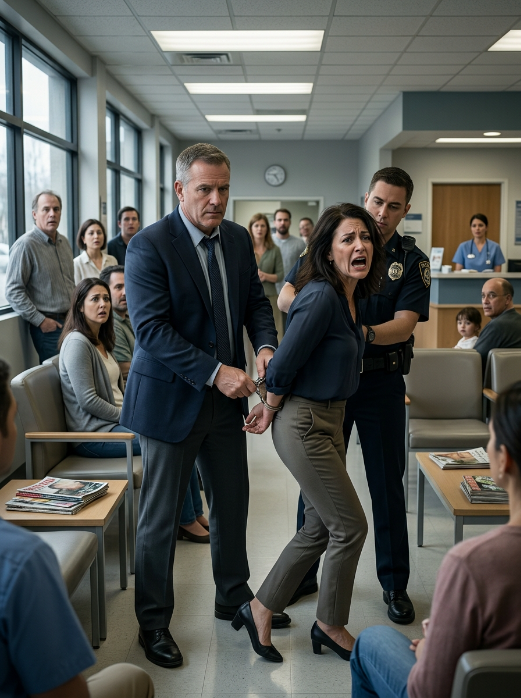
Two security guards in dark blue uniforms appeared through the gap in the curtain before the second ring had even finished echoing down the linoleum hallway. Please take this woman to the waiting area and make sure she stays there until I call for her, Nurse Vance said to the taller guard, her voice dropping into that low, flat register that doesn’t leave room for arguing. Evelyn started to scream then, her fingers clawing at the air as the guards took her by the elbows and backed her out through the yellow cloth. Don’t you dare ruin this family, Nina, she yelled over her shoulder right before the curtain snapped shut and the metal rings clicked together along the track.
The room got very quiet then, just the steady, rhythmic beep of the monitor and the hum of the overhead vents pushing dry air down onto my face. Nurse Vance pulled a fresh pair of blue gloves from the wall dispenser, snapped them over her wrists with a crisp sound, and laid a warm woolen blanket across my chest while keeping her eyes entirely off my ruined leg. You’re safe in this room, Nina, she told me, her voice softening just a fraction around the edges. Nobody is coming through that curtain unless I say so, and the police officers are already waiting at the front desk because we report every blunt-force trauma that comes through those doors. Now tell me what you told him that made him pick up a tool.
I stared up at the fluorescent tubes flickering behind the plastic ceiling tiles and thought about the old metal lockbox I had found under the eaves in our attic two days ago while looking for my winter boots. It was rusted shut around the latch, and I had to use an old flathead screwdriver to pry the lid off, sending flakes of red paint all over my mother’s spare quilt. Inside wasn’t old tax papers or family photos like I expected, but a thick stack of certified documents with my brother’s name on them, including a marriage certificate from a town three counties over dated back in the fall of 2021. Julian had married a girl named Valerie Miller in a quiet ceremony with two strangers as witnesses, and he never bothered to get a divorce before he started flashing an engagement ring at Clara three months ago. Clara’s father owned the lumber yard where Julian bought his supplies on credit, and they were supposed to get married in September in a tented reception down by the river.
I called Clara from the kitchen landline this afternoon while Evelyn was out at the grocery store, I told Nurse Vance, my voice shaking as the adrenaline finally started to wear off and leave me hollow. I gave her the marriage license number and told her to check the county archives before she let him put his name on the deed to her parents’ lake house. Julian showed up twenty minutes later in his truck, red-faced and shaking, and he didn’t even yell when he walked up behind me by the woodpile. He just reached into the back of his cab, pulled out that heavy iron bar, and swung it like he was driving a fence post into hard ground.
Nurse Vance had been listening with her head tilted down, her fingers resting lightly on the chart rack at the foot of my bed, but when I said Valerie’s full name, her entire body went completely rigid. She didn’t blink. She slowly took her hands off the chart and looked up at me with a expression that made my skin go cold under the warm blanket. Say that name again, she whispered, and her voice didn’t sound like a nurse anymore, but like someone who had just stepped on a piece of glass in the dark.
Valerie, I said, my throat feeling dry and raspy like I had been swallowing sand. Valerie Miller. That was the name on the certificate in the box, and my mother had the original copy tucked right behind her old church hymnals. Nurse Vance didn’t say another word to me. She turned on her heel, walked straight to the wall-mounted computer terminal by the sink, and started typing with such furious speed that the plastic keys clattered like gravel in a tin bucket.
I watched her shoulders tense up as she scrolled through old digital archives, her eyes darting across lines of green text that reflected off the thick lenses of her glasses. October fourteenth, 2023, she muttered under her breath, her fingers pausing on the enter key. An unidentified female brought in by EMS at two in the morning from the shoulder of Route nine near the county line. Initial report listed it as a hit-and-run pedestrian strike. She turned the flat-screen monitor toward my gurney so I could see the grainy black-and-white images glowing in the dim light of the trauma bay.
Look at the X-rays, Nina, she said, pointing a finger at the glowing skeleton on the screen. She had severe trauma to her skull and ribs, but her left knee was shattered in the exact same distinct, localized pattern as yours. A heavy, narrow metal object swung with deliberate force. Not a car bumper. Never a car bumper. The hospital room seemed to shrink around me until the walls felt like they were pressing right against my shoulders.
What happened to her, I managed to get out, though my tongue felt too heavy for my mouth. She was in a coma for four days without any identification on her because her purse was never found, Nurse Vance said, her voice dropping so low I had to read her lips to catch the rest. We called her Jane Doe ten. I was her primary night shift nurse during those four days. I was the one who held her hand when her brain activity flatlined and the doctor told us to turn off the machines. We filed her fingerprints with the state police, but there was no match in the system because she hadn’t lived in our state long enough to get a local license. The case went cold by the end of the week because nobody came forward to ask where she was.
A terrible, heavy silence settled over the room, broken only by the hum of the refrigerator in the corner where they kept the saline bags. I thought about my mother’s mortgage three years ago, about how she suddenly paid off the remaining eighty thousand dollars in one lump sum after telling everyone she won a church raffle that nobody could remember attending. I thought about how Julian always had cash for new truck tires and deer leases even though he hadn’t worked a full week for six months straight. My mother hadn’t just been helping him hide a secret wife from the women he was swindling. She had helped him bury the evidence when that wife found out about the other girls and threatened to go to the police.
You need to call the detectives who just brought me in, I whispered, reaching out to catch the edge of Nurse Vance’s blue sleeve. They’re still out in the hallway. They’re already here, she said, straightening up and walking toward the gap in the yellow curtain. She pulled it back three inches and motioned to the two plainclothes officers who had been standing by the vending machines drinking black coffee out of paper cups.
Detective Harris was a tall man with graying temples and a heavy leather holster that creaked every time he shifted his weight from one foot to the other. He listened to my account without interrupting once, taking notes in a small black spiral book with a yellow pencil that had a chewed-up eraser. When Nurse Vance brought up the 2023 trauma records and placed the old X-rays side-by-side with my new digital scans on the computer screen, Detective Harris let out a long, slow breath through his nose and closed his notebook with a sharp snap.
That’s the same tool, Harris said, looking down at me like he was trying to figure out how I managed to survive the exact same ambush that killed a woman three years ago. Or at least the same weight and leverage. We’re going to need that lockbox from your mother’s attic, Nina, and we’re going to need it before she has someone go into that house and clean out the rafters.
While the surgical team prepped me for an emergency reduction and internal fixation with steel plates, the police moved fast enough to catch the daylight before it faded behind the ridge. Through the small high windows of the holding area, I watched two marked cruisers turn into our driveway with their headlights off, rolling slow over the gravel like they were creeping up on a deer in the brush. They found Julian out behind the garage with the tailgate of his Dodge down, trying to shove a heavy canvas duffel bag under a pile of old cedar fence boards.
The tire iron was still sitting right on top of the spare tire in his trunk, the gray metal stained with a dark patch of dried blood that didn’t belong to the deer he claimed he had hit the week before. When the crime lab technicians ran the genetic swab along the handle and down into the rusted grooves of the square drive, they found a match to the DNA profile stored from the Jane Doe tissue samples sitting in the state archive since 2023. My mother was sitting on a folding chair in the station booking room when they brought Julian in through the side entrance in silver cuffs, and she didn’t even look up from her lap when the flashbulbs went off in the hallway.
They found the rest of it behind the false back of a cedar wardrobe in the master bedroom two days later. A twenty-five-year-old life insurance policy on Valerie Miller listing Julian as the primary beneficiary and Evelyn as the backup, along with eighty-four thousand dollars in cashier’s checks hidden inside an old hollowed-out dictionary. Clara brought the police three boxes of printed text messages and voice memos where Julian had threatened to put her in the hospital if she ever checked his credit score or asked about the house in the next county over. The state didn’t even need my testimony by the time the grand jury finished hearing from the medical examiner and the bank tellers who watched Evelyn deposit the insurance payout three weeks after Jane Doe’s funeral.
The recovery took eight months of steel pins, physical therapy, and sitting in a hard plastic chair while people in white coats tried to bend my knee past forty degrees without making me black out from the pain. Evelyn wrote four letters from the county jail during her first month waiting for trial, each one filled with talk about family honor and how I was destroying our name for the sake of a stranger who didn’t even belong to us. I didn’t open any of them. I took the whole stack straight to the kitchen stove and dropped them into the burner one by one until the paper curled black and turned into gray dust in the iron skillet.
Margaret Vance dropped by the outpatient rehab center every Tuesday afternoon after her shift ended at the hospital, usually bringing a paper cup of black coffee and a stale blueberry muffin from the cafeteria. She would sit on the edge of the low wooden gym bench while I worked with the rubber resistance bands, her dark eyes tracking every time my knee twitched or locked up against the metal brace. We didn’t talk much about the trial or what happened in the driveway because there wasn’t anything left to say that the court files hadn’t already covered in triplicate.
Seven months after that night in the emergency room, I stood between the two parallel steel bars in the center of the rehabilitation gym while the afternoon sun cut long, dusty rectangles across the polished wood floor. My left leg felt stiff and heavy like it had been carved out of green oak, but the scar running down from my kneecap was smooth and pale and the bone underneath didn’t shift when I put my weight on it. Margaret was sitting over by the radiator with her coat across her knees, watching me with that same quiet gravity she had used when she pulled back the curtain in trauma bay four.
Ready, Nina, the therapist asked, his hand hovering an inch away from my elbow just in case the knee gave out like it used to do. I let go of the right parallel bar, felt the cold steel leave my palm, and took one slow, deliberate step forward into the light. Margaret gave me a single, firm nod from the bench, but she didn’t smile, and neither did I, because some things don’t get fixed just because you finally manage to stand up on your own two feet again.