How My Husband Slapped Me Over Spilled Soup and Met His Mother’s Smart Hub

The smell of cold lemon water and old linen was still on my hands when I walked into the grand dining room of the Paradise Valley mansion. Fifteen people were sitting around the long mahogany table, all dressed in light linen and soft silk, and every single one of them was staring at me like I was something they stepped in on the way up the front steps. My husband Callan was standing right in front of me, his hand still dropped at his side, his face rigid with anger, his knuckles white where he had been gripping the back of a carved chair.
The sting on my left cheek was so sharp and hot that my eyes watered instantly, though I bit down hard on the inside of my lip to keep from making a sound.
“You apologize to my sister right now,” Callan said. His voice was low, but it cut straight through the silent dining room with the cold precision of a table saw. “You apologize for coming into this house and disrespecting my family.”
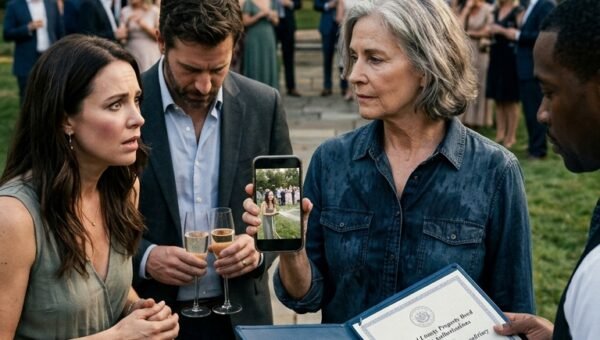
To my left, his sister Brooklyn was sobbing dramatically, clutching the front of her designer ivory silk dress with both trembling hands. Thick, orange lobster bisque was dripping from her lap down onto the custom silk-blend rug, pooling around the tips of her matching designer heels. The whole scene looked like something out of a bad movie where everybody had rehearsed their lines except for the person they brought in to play the fool.
“She did it on purpose,” Brooklyn gasped through fake tears, looking up frantically at her mother, Melissa, who was seated at the head of the table like a queen presiding over a court of execution. “She’s been jealous of me since the wedding rehearsal. She tilted the tureen right onto me.”
I held my breath, trying to steady the wild pounding in my chest that felt like a trapped bird beating its wings against my ribs. “Callan, I didn’t touch her. She grabbed the handle herself.”
“Shut up, Anastasia,” Melissa snapped from the head of the table, not even bothering to look up from her napkin as she dabbed at a stray drop of soup that had missed Brooklyn’s skirt and hit the floor. “We all know where you come from. Your father runs a hardware store in Mesa, and you’ve never spent a day around people who know how to keep their hands to themselves. You don’t know how to act in a home like this, but physical aggression is where we draw the line.”
Callan stepped closer, leaning into my personal space with that heavy cologne he wore to board meetings, the one that smelled like cedar and expensive debt. “You hear my mother.
Get on your knees and apologize to Brooklyn for ruining her dress, or you leave this house right now and don’t ever come back.”
Six months ago, I had married Callan thinking we were partners building something real from two entirely different worlds. I grew up in Mesa, working the registers and loading drywall at my dad’s hardware shop, learning that a person’s word was worth more than any signature on a piece of paper. Callan was old Paradise Valley money, the kind of family where the silver was inherited and the debts were hidden behind high stone walls and wrought-iron gates. When we first met at a charity gala in downtown Phoenix where I was helping my dad’s friend cater, Callan swore up and down that he didn’t care about the difference in our backgrounds, that my Calloused hands were worth more than all the soft palms in his social circle combined.
But ever since the wedding, the mask had slipped away piece by piece. His family treated me like a charity case they had been forced to adopt out of civic duty, making subtle remarks about my hands, my off-the-rack clothes, and my father’s dusty shop. Brooklyn had even taken my grandmother’s solid gold bracelet right off the guest bedroom dresser two weeks ago, claiming with a bright smile that she was just borrowing it for a rooftop party in Scottsdale, and then laughed in my face when I asked for it back.
I had spent months swallowing my pride, biting my tongue, and trying to fit into a mold that was never built for someone like me. I wanted so badly to make my marriage work, convincing myself that Callan was just stressed from his corporate restructuring work and that his family would eventually warm up once they saw I wasn’t going anywhere. Every time they made a snide remark about Mesa or my dad’s pickup truck, I told myself to be the bigger person, to keep the peace, to smile and pass the bread basket. I had let them push me into corners, talk over me at dinner parties, and treat my family history like a punchline told behind my back over midday mimosas.
When Callan slapped me in front of fifteen of his family’s high-society friends, something inside me broke, but it didn’t break the way they expected it to. The heavy, suffocating desperation to please them, to earn their approval, to prove I belonged in their marble-floored world evaporated in a single second. The silence in the room wasn’t deafening; it was completely clear, like the moment right before a thunderstorm hits when every leaf on the tree stops moving.
I looked Callan straight in his eyes, refusing to let him see the water welling up behind my lashes. I didn’t cry, and I didn’t scream, because screaming was for people who still thought they could reason with a brick wall.
“I am not apologizing for something I didn’t do,” I said quietly, my voice steady enough to surprise even myself.
I turned around on my heel, walked out of the formal dining room through the swinging double doors, and stepped into the grand, commercially equipped kitchen to grab my leather handbag from where I had left it on the butcher block.
As I reached for my purse on the marble counter, my eyes landed on the kitchen counter fixture sitting right beside the espresso machine. It was a black, sleek smart home display hub that Melissa had installed two months ago to manage her recipes, sound systems, and security devices around the sprawling property. Right above the small color screen, a tiny blue light was glowing steadily, pulsing with that soft, rhythmic heartbeat that modern electronics always seemed to have when they were working away behind the scenes.
I knew that exact light because Callan and I had spent two hours on a Sunday afternoon helping his mother set up her home automation account when the installers left without finishing the Wi-Fi pairing. Callan had been complaining the whole time about how complicated modern tech was, and he had used his own phone as a backup administrator on the master system account so he could help her troubleshoot it from his office downtown without having to drive all the way out to Paradise Valley. That smart hub had a wide-angle 4K lens built directly into the front frame, positioned right at eye level, pointed directly down the open archway leading straight into the formal dining room where fifteen people were currently recovering from the drama of the lobster bisque.
And that little blue light meant the camera was actively recording motion on a continuous loop to the cloud server, capturing everything that happened within its ninety-degree field of view with crisp, unblinking accuracy.
I picked up my purse, squeezed my phone tight in my hand until the plastic casing dug into my palm, and walked out the heavy oak front door into the hot Arizona sun without looking back once.
I got into my sedan and drove three miles down the road before pulling into an empty, sun-baked parking lot off Lincoln Drive where the oleanders were blooming bright pink against the concrete walls. My left cheek was still throbbing, hot and heavy under my skin, but my mind was completely clear, running on that cold, sharp focus that only real humiliation can buy.
I pulled out my phone and unlocked the screen with my thumb. Callan had set up our joint mobile plan four months ago when we combined our bills, and because he was terrible with technology and hated having to remember multiple passcodes, he had used his master university-era password for everything digital in his life, including his mother’s smart home system app. I opened the security app on my phone, entered the login credentials I had jotted down in my digital notes during the system setup back in March when Callan wasn’t looking, and waited for the server to ping.
The cloud server loaded in less than five seconds, bringing up the master dashboard for the Paradise Valley estate with all five zone cameras listed down the left side of the screen.
I navigated straight to the kitchen hub feed, ignoring the garden and driveway feeds that showed nothing more than parked luxury cars and empty lawns. The camera had motion-detection recording turned on continuously as part of Melissa’s paranoid neighborhood watch settings, which meant nothing in the line of sight was ever truly lost. I filtered the video logs for the last thirty minutes, right down to the timestamp of the soup course, and clicked the most recent file labeled kitchen_archway_18.42.
The video was crystal-clear, captured in crisp high definition with perfectly sharp audio that picked up even the clink of silver against china from the next room.
I pinched the screen with two fingers to enlarge the view through the kitchen archway, centering the frame right where the mahogany table began. The angle was absolute perfection, catching every single movement without distortion or lag.
On the screen, you could clearly see Brooklyn sitting at her place at the table, looking bored while I stood right beside her, holding the heavy silver-plated soup tureen, serving the guests as Melissa had instructed me to do before dinner started. Brooklyn looked around the room, made sure her mother was distracted by a conversation about summer homes with a retired judge sitting to her left, and then deliberately reached up with both hands, grabbed the hot tureen handles, and pulled the heavy vessel directly down onto her own silk-covered lap.
She hadn’t slipped, and she hadn’t been bumped; she had intentionally dumped the boiling bisque over her ivory dress with all the calculated precision of someone who knew exactly what kind of scene she wanted to create.
The video kept playing without a pause, recording every subsequent second with brutal clarity. It caught Brooklyn jumping up with an exaggerated, theatrical shriek that didn’t match the actual mechanics of being burned. It caught Melissa shouting across the table about ruined silk and clumsy guests. And then it caught Callan rushing over from the far side of the room, his face dark with inherited arrogance, raising his right hand, and slapping me across the face so hard my head snapped sideways on the screen. The sound of the smack echoed cleanly through the audio track like a gunshot in an empty warehouse.
My hands trembled as I hit the download button, saving the unedited raw video file directly to my local phone storage, uploading it to my private cloud backup, and attaching it to an outgoing email addressed straight to my father’s private account with the subject line keep this safe.
Callan thought I was a quiet girl from Mesa who would hide in a corner and cry until I begged for his forgiveness like some kind of medieval servant. He thought my family’s lack of country club memberships and trust funds meant I had no defense against people who wore their wealth like body armor.
Ten minutes later, I drove straight to the Paradise Valley Police Department, the air conditioning in my sedan blasting cold air against my still-burning face.
I sat in a small, windowless interrogation room with a tired-looking desk officer named Miller and played the video for him on my phone screen while he watched with a flat, professional expression. I turned my head so he could see the bright red handprint clearly visible across my left cheekbone, the distinct pattern of Callan’s palm still mapped out in broken capillaries. The officer took three official photos of my face with a department camera, watched the footage twice through from start to finish, and took my official written statement down in his black notebook. Because of the clear, undeniable video evidence showing felony domestic assault by a known public figure within the town limits, the officer immediately opened a felony domestic violence case and issued an expedited warrant for Callan’s arrest.
Next, I called an attorney my father had recommended years ago when the hardware store was fighting a commercial lease dispute, a sharp family law specialist in downtown Phoenix named Sarah Vance who didn’t take nonsense from anybody in the valley. I met Sarah in her high-rise office overlooking the brown expanse of Camelback Mountain two hours later.
When Sarah saw the video on her office monitor, she leaned back in her leather chair, looked up at me with a steady, fierce expression, and let out a short whistle through her teeth. “This changes everything, Anastasia. They think they can squeeze you out with nothing because of your background, but this footage proves criminal assault, malicious defamation, and deliberate entrapment. We are going to execute a complete settlement strategy today before they even realize what hit them.”
By nine o’clock the following morning, Callan had been processed at the Paradise Valley station and released on bond after posting twenty thousand dollars cash through a bail bondsman on Lincoln Drive. He was completely terrified, not because he felt any remorse for what he had done, but because his mother’s high-society reputation was on the line and his own corporate vice president career at a regional logistics firm was facing immediate termination if the felony charge went to trial in front of a judge who didn’t care about old money.
Sarah scheduled an emergency legal meeting at her downtown office conference room for two o’clock that afternoon, insisting that Callan and Melissa attend in person alongside their high-priced defense counsel.
When Callan and Melissa walked into the glass-walled conference room with their expensive attorney, a man in a charcoal suit who looked like he spent all his time trying to keep rich people out of handcuffs, Callan looked pale and exhausted, his shirt collar slightly unbuttoned like he hadn’t slept a wink in jail. Melissa looked furious, her arms crossed tight over her chest, her face pinched into an expression of profound disgust.
“This is ridiculous,” Melissa said, slamming her leather handbag onto the polished walnut table before even sitting down in the chair. “Anastasia spilled soup on my daughter during a family dinner, threw a violent, hysterical fit, and now she is trying to extort my son with trumped-up police reports. We will countersue her for every penny her father’s little hardware store is worth in Mesa.”
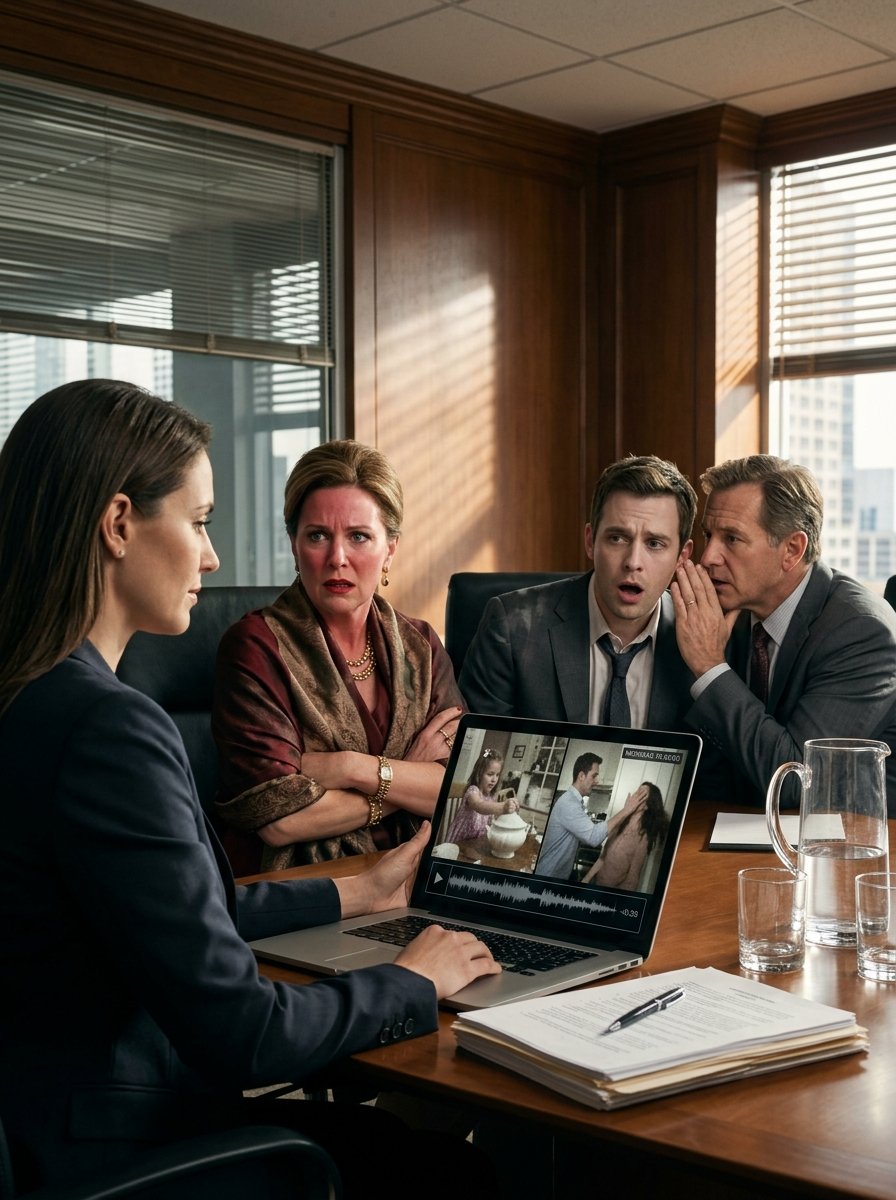
Sarah didn’t argue with her, and she didn’t raise her voice to match Melissa’s country club screech. She simply pulled out her laptop, turned the screen toward them so they had an unobstructed view, and pressed the play button on the media player.
The video played on the large laptop monitor with the volume turned up high. The crisp, clean audio filled the quiet, sterile room, leaving nowhere for anyone to hide behind their designer clothes or their family name.
They watched Brooklyn grab the tureen and pull it down onto herself with calculated malice. They watched Callan step forward across the rug and slap me across the face with enough force to turn my neck. They heard Callan demanding that I get on my knees like a dog in front of his mother’s guests.
Melissa’s face went completely red, the blood rushing up from her collar until she looked like she was about to pop a blood vessel. Callan stared blankly at the screen, his mouth open slightly, total, suffocating silence falling over the conference table as the reality of what they had captured on their own smart home system finally sank into their skulls.
“That video was recorded on your own client’s smart hub in the Paradise Valley kitchen,” Sarah said calmly, her voice like ice water. “It is archived, backed up across three independent cloud servers, and already logged into the official police evidence database. If we go to trial, this video will be played in open court for the press, the public, and Callan’s corporate board to examine frame by frame.”
Sarah leaned forward, placing a set of printed legal documents squarely in the center of the table between their coffee cups.
“Here are our non-negotiable terms,” Sarah said, pointing a manicured finger at the signature lines. “First, Callan agrees to an immediate, uncontested divorce with zero claims on any future assets. Second, Anastasia receives a flat lump-sum financial settlement of $150,000 for damages, medical evaluation, and marital property division, payable via cashier’s check within forty-eight hours. Third, Brooklyn will hand over Anastasia’s heirloom solid gold bracelet to the police officers waiting outside this building within two hours, or we file secondary felony theft charges against her for the property taken from the guest bedroom.”
Callan looked across the table at his defense lawyer, his eyes wide with panic. The lawyer took one look at the video timestamp, closed his notepad with a decisive snap, and leaned over to whisper harshly in Callan’s ear.
“Sign it,” Callan’s lawyer whispered audibly, his voice dropping all pretense of professional courtesy. “Sign it right now before they add civil extortion charges to the docket.”
Callan signed the agreement with a shaking hand, his pen scratching loudly against the heavy paper while his mother turned her face away in bitter, defeated silence.
An hour later, I stood outside the precinct police station in Mesa under the bright afternoon sun. A black and white police cruiser pulled up smoothly to the curb, and an officer stepped out holding a small plastic evidence bag by the top seal. Inside the bag was my grandmother’s solid gold bracelet, untouched, unblemished, and shining brightly in the harsh Arizona light.
I took the bracelet out of the bag with my own hands, slipped it onto my wrist over my pulse point, and felt the familiar, grounding weight of the real gold against my skin like an old friend coming home.
I got back into my car and drove straight to my father’s hardware store on the main commercial strip in Mesa, the tires crunching softly over the gravel in the side lot.
When I stepped through the front glass doors, the familiar, comforting scent of clean cedar wood, fresh motor oil, and polished brass filled my lungs, instantly washing away the stale scent of Paradise Valley money and corporate fear. My dad was standing behind the main counter, wearing his worn blue canvas apron, sorting brass woodscrews into their respective plastic bins by size.
He looked up, saw me walking toward him down the center aisle, and set his magnetic sorting tool down on the counter without a word. He didn’t ask a dozen frantic questions right away because he knew how I worked when things got heavy. He just looked at my face, saw the quiet, settled peace in my eyes, and gave me a long, warm, protective hug that smelled like pine sawdust and honest work.
I walked over to the back workbench where the old stool sat, sat down on the wooden seat where I had spent my childhood afternoons doing homework while the register chimed up front, and rested my arms on the scarred wooden counter.
I held up my wrist, looking at my grandmother’s gold bracelet catch the bright Arizona sunlight streaming straight through the plate glass front windows.
I had left Paradise Valley behind for good, trading their marble floors and broken promises for the solid wood of my father’s shop. I had my dignity back, my financial freedom secured, $150,000 sitting safely in a brand new account in my own name, and my family name intact without a single stain on it. I leaned back against the wall, rested my hands on the warm wooden counter, and breathed in the fresh, clean air of a place where nobody ever had to pretend to be someone they weren’t.