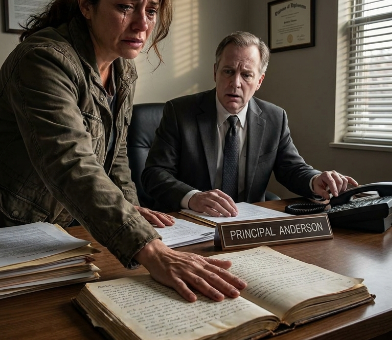
Why did Ethan Cross spend three weeks hauling bags of quick-setting concrete into the back corner of my daughter’s workshop the summer before he drove his pickup truck into a cedar tree on Highway 151?
I asked myself that exact question every single afternoon for six months after the funeral. Hannah was still grieving him then, wearing his old flannel shirts around the house and crying into her coffee every time the high school bell rang. She is twenty-eight, a quiet science teacher who spends her Saturdays grading lab reports at the kitchen table, and she loved him with the kind of stubborn loyalty that runs deep in our side of the family.
I never liked Ethan much myself. He had too many sharp edges and a way of looking at people like they were figures on a ledger he was trying to balance. But Hannah saw something else in him, so I kept my mouth shut and helped them pour the gravel driveway back in May of last year.
That was before the 10-day backpacking permit for the Boundary Waters came in the mail. Hannah had been talking about that trip since the snow melted, needing a break from the lesson plans and the memory of the headstones up at St. Joseph’s. She left on a Thursday morning in her old Subaru, her pack smelling of dry canvas and insect repellent, and told me she would have zero cellular reception until the following Sunday week. Before she pulled out of the gravel drive, she handed me her spare house key on a small brass ring.
“Just keep an eye on the mail, Dad,” she told me through the open window, her fingers tapping the steering wheel. “And make sure Jesse gets the back lawn done before it gets too knee-high.”
Jesse Miller is twenty-four, runs a small one-man lawn care outfit out of an old blue Ford flatbed, and has the kind of steady, unhurried hands you don’t see much on boys his age anymore. I hired him to mow Hannah’s half-acre lot while she was out north, figuring it would take him an hour or two on Friday afternoon. Cedar Rapids was sitting under a heavy, stagnant heat that week, the kind of August weather where the air feels thick enough to chew, and I had stayed home in my quiet archive room downtown, sorting through old municipal tax rolls from the nineteen-twenties.
My phone started buzzing on the kitchen counter at 3:14 in the afternoon.
I saw Jesse’s name on the caller ID and figured he had hit a sprinkler head with his mower deck or found a dead limb across the fence line.
I picked it up and told him not to worry about it, whatever it was.
“Mr. Vance?” Jesse’s voice didn’t sound right. It was flat and tight, stripped of that easy morning politeness he usually carried. “Is there supposed to be anyone else at the house right now?”
I stopped shuffling my index cards. The radiator in the hallway gave a little hiss. “No, Jesse. Hannah’s three hundred miles north in the timber country. The place is completely empty.”
There was a long pause on the other end, just the sound of cicadas buzzing against a screen door. Then I heard the heavy thrum of his lawnmower engine die out abruptly in the background. The sudden silence in his audio feed felt heavier than the noise had.
“Mr. Vance,” Jesse said again, his voice dropping to a harsh whisper. “I’m standing by the rear patio. I just heard something come up through the foundation vent. Someone is down there.”
My stomach did a slow, sick turn, but I kept my voice steady because fifty-eight years of municipal work teaches you that panic never cleared a desk. “An animal probably. A raccoon or an opossum got under the floorboards through the old crawlspace access.”
“Raccoons don’t bang on metal pipes, sir,” Jesse said, and right then, through the small speaker of my old flip phone, I heard it.
It wasn’t an animal. It was a rhythmic, dull thud against iron plumbing, followed immediately by a faint, high-pitched sobbing sound that cut off halfway through as if someone had clapped a hand over a small mouth.
“I’m on my way,” I said, and the call went dead before he could answer.
I didn’t bother locking the front door of my own place. I grabbed my car keys off the hook by the calendar and drove the ten minutes across town with my knuckles white against the steering wheel, running through every logical explanation I could pull up from my years of archival reading. Hannah’s house was an old craftsman build with a fieldstone foundation, but Ethan had added that rear woodworking workshop three years ago when their engagement was still new. He had done all the carpentry himself, working late into the night with his circular saw screaming against the dark, telling me he was reinforcing the floor joists to hold his heavy cast-iron table saw and wood lathes.
When I pulled up behind Jesse’s blue Ford, the heat off the asphalt was shimmering in oily waves. Jesse was waiting by the side gate with his trimmer shaft still in his hand like a walking stick, his face pale under his baseball cap.
“Did you call the precinct?” I asked, killing my engine.
“I called you first,” he said, shaking his head. “Mr. Vance, it’s not a raccoon. Listen.”
We walked together down the narrow gravel strip between the house and the neighbor’s cedar hedge, moving toward the rear wall where the workshop addition met the old dirt grade. The yard smelled of freshly cut fescue and hot tar from the shingles. As we stepped up onto the concrete slab of the patio, the sound hit us through the low metal foundation vent, a thin, shivering squeak of a voice crying out words I couldn’t quite make out, backed by that terrible, hollow knocking against cast iron.
My archive training kicked in then, cold and clinical, but my hands were shaking as I reached into my pocket for Hannah’s brass key ring.
“She doesn’t have a basement,” I said, mostly to myself, thinking of the original blueprint rolls I had filed away in my garage cabinet from when Hannah bought the place. “There’s no cellar under this addition. The county records show only a shallow dirt trench for the sewer drop.”
“Then what is making that noise?” Jesse asked, his eyes fixed on the low wooden siding of the workshop wall.
Instead of waiting for a patrol car that might take half an hour to wind through downtown traffic, I slid the brass key into the front door lock and pushed it open. The air inside Hannah’s house felt cool and smelled faintly of lavender and old paper, exactly the way she liked it. But as we crossed the living room toward the back service door leading into the workshop, the smell changed. Underneath the lavender, there was a sharp, chemical tang of stale air and old lime, like a cellar that hadn’t seen the sun since the Eisenhower administration.
The workshop was a mess of sawdust, half-finished pine shelving, and Ethan’s old canvas tool bags hanging from wall brackets. A heavy oak workbench sat against the far wall, loaded down with C-clamps, jars of wood stain, and a thick layer of grey dust.
“Help me move this,” I told Jesse.
We didn’t talk as we grabbed the ends of the heavy bench, dragging it across the floor with a screech of iron legs against pine planks. Beneath where the bench had stood, the floor wasn’t made of standard tongue-and-groove boards. Ethan had laid down a sheet of three-quarter-inch plywood over a recessed frame, sealing the edges with dark polyurethane so it looked like part of the subfloor.
I knelt down, my knees popping in the quiet room, and pried up the corner of the plywood with the flat blade of a screwdriver I pulled from Jesse’s back pocket.
Underneath the wood was a heavy steel trapdoor set flush into a thick collar of poured concrete. A modern digital keypad was screwed directly into the steel frame by the hinge, its small LED screen blinking a dull, rhythmic red in the gloom.
The crying from below grew louder now that the wood was gone, muffled by the steel plate but unmistakably human. A tiny voice was calling out over and over through the gap in the seal.
“Please,” a little girl’s voice sobbed from the dark. “Please let me out. My head hurts.”
Jesse dropped to his knees beside me, his fingers brushing the steel edge. “Mr. Vance. That’s a kid. That’s a little kid down there.”
I stared at the blinking red light of the keypad. The battery pack was housed in a small external box bolted to the frame. Ethan had installed it himself six months before he died, telling Hannah it was for storing his expensive antique woodworking tools away from burglars while they were out of town. But the municipal drainage line route ran directly beneath this corner of the lot, dropping down past the old municipal interceptor tunnel that I had spent thirty years mapping out in the city hall basement.
Ethan hadn’t built a tool locker. He had dug out a subterranean concrete box beneath the foundation, tapping directly into the dry brick stormwater culvert system that ran two miles toward the river.
“Do you know the code?” Jesse asked, his breath coming in short hitches.
“No,” I said, but my brain was already racing backward through every Sunday dinner at Hannah’s table, every casual conversation about Ethan’s work habits, and every password he had ever scrawled on the back of his receipts.
Ethan was a creature of stubborn, arrogant habits. He used significant dates for every lock he ever owned, believing nobody would ever guess them because he thought everyone else was simple. I remembered the date he and Hannah had gotten engaged under the old willow tree at the reservoir. October fourth. Ten-fourth. Plus the year they met.
My thumb hovered over the rubber buttons. The red light blinked once, twice, three times.
I punched in the six digits.
With a heavy, mechanical clunk, the internal solenoid fired, and the steel plate popped an inch upward on its heavy gas struts. A rush of cold, foul-air puffed out into the workshop, smelling of damp earth, unwashed blankets, and old iron.
I pulled the door all the way back.
Peering down into the concrete pit by the dim light of a single bare bulb wired to a car battery on the wall, I saw her. She was curled up on a thin blue camping mat in the corner, wearing a dirty pink shirt that was far too large for her, her thin arms wrapped around her knees. She couldn’t have been more than eight years old, her face smeared with dried tears and dust.
“Hey,” I said, my voice cracking so badly I barely recognized it myself. “Hey now, it’s alright. We’re getting you out.”
Jesse didn’t wait for instructions. He dropped down halfway into the hatch, his long arms reaching under the little girl’s arms, and lifted her up into the light as if she weighed nothing at all. Her name, she whispered when I gave her a sip of water from my car bottle, was Lily. She told us a man with a heavy silver ring on his thumb had brought her through the rear drainage pipe entrance early that morning, pushing her down the ladder and telling her to stay quiet or the bad things would happen again.
She had been reported missing out of Waterloo two days ago on the local noon news, though I hadn’t connected the grainy photograph on the screen to anything happening under my daughter’s floorboards. Ethan hadn’t just been a local contractor building custom kitchen cabinets. According to the small stack of burner phones and waterproof ledges tucked behind the battery housing in the cellar, he had been operating a transit drop for an interstate human smuggling ring, using the old municipal drainage network to move kids and cargo under the city without ever touching the streets. And when Ethan died in that car crash six months ago, taking his secrets to the county coroner, the operation didn’t stop. His surviving associate Marcus, who had shared the warehouse lease with him downtown, had kept using the vacant house as a safe harbor because he knew Hannah was miles away in the timber.
Before I could wrap my old flannel jacket around Lily’s shoulders, the front door of the house clicked open.
Footsteps hit the hardwood in the hallway, heavy and unhurried. A man’s voice called out from the living room, loud and casual, expecting to find an empty house and a waiting package.
“Ethan?” Marcus yelled, his boots scraping against the rug. “You got the shipment ready? We’ve got a window at five.”
Jesse froze, holding Lily tight against his chest. I looked around the workshop, my eyes landing on a heavy iron vice clamp sitting on the edge of the workbench.
The workshop door swung inward on its hinges. Marcus stood there in a dirty grey hoodie, a heavy canvas duffel bag slung over one shoulder and a thick steel crowbar tucked into the belt of his jeans. He stopped dead when he saw the two of us standing over the open concrete hatch, with Lily sobbing quietly in Jesse’s arms.
Marcus’s face didn’t go pale; it went hard, his eyes narrowing as he dropped the duffel bag to the floor with a heavy thud.
“Well,” Marcus said, his voice dropping into something ugly. “Looks like you folks were doing some remodeling.”
He reached for the crowbar at his waist.
Jesse didn’t hesitate. He thrust Lily gently toward me, stepping past the edge of the hatch with the long aluminum shaft of his string trimmer raised like a staff, driving the blunt end straight into Marcus’s chest before he could pull the iron free. Marcus grunted, stumbling back against the doorframe, but he swung the crowbar in a wide, vicious arc that caught Jesse across the shoulder and sent him spinning into the shelving unit.
I didn’t think about my age, my archive pension, or the bad knee that usually acted up when the weather turned damp. I grabbed the heavy iron vice clamp with both hands, lunged across the concrete floor like an old dog defending a bone, and slammed it down against Marcus’s wrist with all the weight I had left in me.
The crowbar clattered onto the pine floorboards. Before Marcus could recover his balance, I drove my shoulder into his chest and pinned him flat against the rough wood of the workshop wall, my forearm pressing hard across his throat while Jesse scrambled back to his feet and snatched up the discarded phone from the workbench.
“Dial my cousin Robert,” I panted, keeping my weight square on the man’s chest as he thrashed under my grip. “Tell him precinct code four-zero. Tell him we got the whole nest right here in the floor.”
The police cruisers were there within eight minutes, their red and blue lights flashing against the white siding of Hannah’s house and turning the maple trees out front into flickering shadows. Detective Robert Vance walked through the front door with his notebook already out, his face set in that hard family frown I knew so well, while two paramedics carried little Lily out to the ambulance wrapped in clean wool blankets. They found the ledger books in the crawlspace beneath the workshop, listing names, dates, and wire transfer numbers that went all the way down to Des Moines and Chicago, exposing the whole underground network Ethan had built right under our noses while Hannah was busy grading papers in the next room. Marcus was hauled away in cuffs before the sun had fully cleared the roofline, his face twisted in a silent snarl as they shoved him into the back of the transport.
By evening, the county forensic crew had finished their work and gone, leaving the heavy steel hatch in the workshop propped open with a wooden block, surrounded by bright yellow crime scene tape that fluttered softly in the cooling breeze off the river.
I didn’t go home right away. I walked out onto the front porch, the old wood groaning softly under my boots, and sat down on the top step where Hannah always kept a spare ceramic mug for her tea.
The sun was dipping low behind the maples, painting the Cedar Rapids sky in shades of bruised purple and grey, and the air finally smelled like nothing more than dust and cooling asphalt. Down the gravel lane, the twin beams of an old Subaru swung around the corner, its tires crunching slow and steady against the gravel as Hannah pulled into the driveway, coming home from the timber with her pack in the back seat and no idea at all what had been sleeping beneath her floorboards while she was gone.