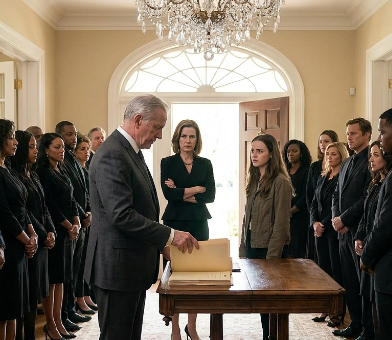
The house felt like a cavern the moment the latch clicked shut. It was a cold, final sound that echoed all the way up the foyer stairs, though I knew the stairs didn’t matter anymore. My hip throbbed with a dull, rhythmic ache that timed itself to my heartbeat. I sat there in my wheelchair, the wheels locked against the hardwood, watching the sliver of sunlight retreat from the welcome mat. Daniel had left without even looking back.
I had asked him for two weeks. Just two weeks in his guest room while the contractors came to widen the doorways and build a ramp out back.
I had been a librarian for thirty years. I knew how to organize a life. But Daniel stood on the porch with his hands shoved deep into his pockets, his jaw tight the way it always got when he was calculating the cost of a favor.
“We just aren’t configured for specialized care, Mom,” he had said, his voice flat, devoid of the warmth he used to have as a boy. “And with the kids, it’s just not realistic. You really should look at those assisted living brochures I left on the counter. It’s time to let the house go.”
Then Melissa had nudged him toward the SUV. She didn’t even meet my eyes. She just looked at her watch and sighed. They left me with fourteen missed calls on my phone and a grocery bag full of frozen dinners sitting on the porch steps, out of my reach. I didn’t know then that they weren’t worried about my care.
They were worried about their inheritance. They thought I was broke, and to them, a broke, crippled mother was just a leaking faucet they couldn’t afford to fix.
The next morning, the silence in the house felt heavy enough to choke me. I needed to move. I needed to feel like I still lived here, not just existed in a cage of my own making. I wheeled myself into Arthur’s office. It was exactly as he had left it six months ago, right down to the stack of unread journals on the corner of his mahogany desk. Arthur was a surveyor. He lived by the precision of a transit level. He didn’t leave messes.
I started wiping the dust off the surface with a damp cloth, my hand shaking just a little. When I reached the brass globe on the corner, I stopped. Arthur had bought that at an estate sale back in the nineties.
It was a heavy, ugly thing, but he loved it. I went to turn it, and my thumb brushed a tiny, recessed catch near the equator of the sphere.
The globe didn’t spin. It clicked. The top hemisphere slid aside, revealing a hollowed-out space lined with green felt. Inside, there was a black leather-bound ledger and a matte-black debit card. I picked up the card first. It felt heavier than plastic. I flipped it over. My heart didn’t stop, but my brain certainly did. Scrawled in Arthur’s sharp, unmistakable hand were the words: “Emergency access only. Call Robert Vance at First National Private.”
I didn’t think about Daniel. I didn’t think about the bills or the medical equipment. I just reached for the phone on the desk and dialed the number I found written on the inside cover of the ledger. Robert Vance answered on the second ring. He sounded like a man who had been expecting a call for half a year.
“Helen,” he said, and his voice was gentle, the way it used to be when he and Arthur would sit on the back porch and talk about land deeds. “I was wondering when you’d find it. Can I come over?”
He arrived in less than twenty minutes. He looked at my wheelchair, then at the ramp-less front steps, and his face hardened. He didn’t say a word about Daniel. He just walked over to the dining room table, cleared a spot, and opened the ledger. He started talking about things I didn’t know existed. A trust. A private account. A series of land sales from years ago that Arthur had funneled into an irrevocable fund to keep me safe.
“One point two million,” Robert said, sliding a bank statement across the table. “Arthur wanted this protected. He didn’t want it to touch the estate because he knew Daniel would try to find it.”
I looked at the number, then at my own hands. I felt a sudden, sharp coldness in my chest. “Why?” I asked. “Why hide it from him?”
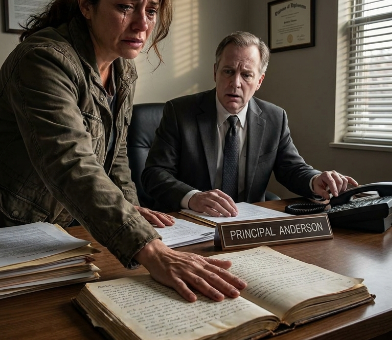
Robert hesitated. He reached into his briefcase and pulled out a manila folder marked with a date from 2018. It was a forensic audit of Arthur’s contracting firm. I remembered that year. Daniel had been working as a junior accountant. There had been a frantic month where Arthur had stayed up all night at the kitchen table, his hair graying in real-time, complaining about “discrepancies.”
“He didn’t just find discrepancies, Helen,” Robert said, his voice dropping. “He found a theft. Eighty-five thousand dollars. Forged signatures. He used the money for a house down payment.”
I read the document. My hands were shaking so hard the paper rattled against the table. I saw the forgeries. They weren’t even good. Arthur had covered it. He had paid the money back into the company accounts, he had told the board it was an administrative error, and then he had made Daniel sign a document. It was all there. A waiver. An exit agreement. Daniel had traded his entire share of the future estate for that down payment.
Arthur had kept the secret to save his son’s career. But he hadn’t trusted him with a single cent after that.
“He knew this day would come,” Robert said. “He knew that once he was gone, Daniel would come looking for the money. He wanted to make sure you were independent. If Daniel finds out about this trust, he will go to a lawyer. He will try to claim you aren’t competent to manage your own finances. He wants to be your guardian.”
I sat back in my chair. The rage that had been simmering in my stomach for twenty-four hours finally crystallized. It wasn’t just that they had left me here to rot. It was that they had done it while calculating exactly how much my house was worth and how quickly they could stick me in a home to get their hands on what they thought was mine. They were thieves. They had been thieves for seven years.
“What do we do?” I asked.
Robert leaned in. “We make sure he never touches your money. And we make sure he never looks at you the way he did yesterday.”
Three days later, the house was a construction zone. The sound of power drills and the smell of sawdust filled the hallway. I felt a strange kind of peace. I was sitting at the dining room table with Robert, looking over the new security contracts, when the front door burst open. Daniel and Melissa didn’t knock. They didn’t even pause. They marched into the foyer like they owned the place, their faces twisted with a mix of performative concern and underlying greed.
“Mom, we’ve been trying to reach you,” Daniel started, his voice dripping with that fake, saccharine worry he used when he wanted something. “We’re really concerned about how you’re handling your affairs. The neighbors said contractors are here? You can’t be signing contracts without us.”
He looked at Robert, then at the industrial lift they were installing in the hallway. His eyes narrowed. He looked like he wanted to punch the wall. “Who is paying for this? You don’t have the cash for this kind of work. Have you been taking out loans?”
I didn’t answer him. I just watched him. He looked so small. He looked exactly like the twenty-year-old boy who had forged his father’s signature because he wanted a nicer house than he could afford.
“I have a trust,” I said, my voice steady.
Daniel laughed, a sharp, nervous sound. “What trust? Dad didn’t leave a trust. He left the house and the business accounts. That’s it. You’re draining your savings, aren’t you?”
“I’m using the money your father left me,” I said. “The money you thought you had access to once I was safely tucked away in a facility.”
Melissa stepped forward, her heels clicking aggressively on the floor. “Helen, don’t be dramatic. Daniel is just trying to protect you. We’re family. You shouldn’t be letting some stranger look at your bank accounts.”
I reached into the folder on the table. I pulled out the 2018 audit. I didn’t say a word. I just slid it across the mahogany surface. It stopped right at Daniel’s fingertips.
He looked down. I watched the blood drain from his face. I watched the realization hit him, hard and fast, that his father hadn’t just been a surveyor. He had been a man who kept records. Every detail, every forgery, every stolen dollar. It was all laid out in black and white, notarized and waiting.
“Is this yours?” I asked. “The signature on the forged corporate withdrawal?”
Daniel didn’t speak. He couldn’t. He looked at the paper, then at me, then at the front door.
“If you ever step foot on this property again,” I said, my voice dropping until it was just a whisper that filled the room, “I will hand this to the District Attorney. And I will send a copy to the managing partners at your firm. You can explain the 2018 embezzlement to them over a coffee. Or maybe you can explain it to the police.”
Melissa’s face turned a mottled shade of red. She reached for Daniel’s arm, but he was already backing away. He looked at the paperwork, then at the heavy front door. He looked like he was suffocating. He didn’t argue. He didn’t try to justify it. He didn’t even say goodbye. He just turned around, grabbed Melissa’s arm, and hauled her out the door. He didn’t look back this time.
I sat there for a long time after they left. I didn’t cry. I didn’t feel the need to. I just watched the dust motes dancing in the afternoon light. I was finally, truly alone in my own home, and for the first time in years, the air didn’t taste like other people’s expectations.
It is six weeks later now. The sun is hitting the new glass of the porch just right, casting warm, golden light across the floorboards. I operate the toggle on my motorized wheelchair, feeling the smooth, silent glide as I move onto the deck. The ramp is perfect. The security gate at the end of the driveway is closed and locked, exactly the way it should be.
I pick up my tea. It’s hot, just the way Arthur liked it, and the biscuit on the side of the plate is a little bit crumbly. I watch a hawk circling over the back meadow. I’m sixty-eight years old, my hip still aches when the humidity climbs, and the house is full of things that remind me of a life I used to share with someone who actually loved me. But the bills are paid. The doors are locked. And for the first time in my life, I am the only one who holds the key to the ledger. I take a sip of my tea, watch the gate, and enjoy the quiet. It’s the most beautiful thing I’ve ever owned.