482 days. That is the exact amount of time I spent in the dark, windowless sub-basement of the Solmere Hotel, breathing in the scent of damp concrete and rotting cardboard. My name is Charlotte Vale, though no one at the hotel knew that. To the staff and the board of directors, I was just “Charlie,” the quiet, hardworking inventory clerk who never missed a shift and never complained when they made me haul heavy crates of linens up from the archives at 3:00 in the morning.
They didn’t know I was the daughter of Eleanor Vale. They thought I was a ghost, a dead heiress whose mother’s empire had been rightfully absorbed into the new, shiny machine run by Victoria Sterling.
I remember the day my mother passed. It was a Tuesday in early spring. The air was cold, and the funeral was small because Victoria had made sure it stayed that way. I was only twenty-two, grieving and lost, and Victoria, who had been our family lawyer for as long as I could remember, held my hand and told me she would take care of everything. She told me the estate was a mess, that the taxes were suffocating, and that I should focus on my studies abroad while she cleaned up the wreckage.
I believed her. I was young, foolish, and I trusted the woman my mother had treated like a sister. By the time I realized the truth, the locks had been changed and my access to everything I had ever known was severed.
I spent months in London just staring at the wall, waiting for a call that never came. Then, I realized no one was coming to save me. I had to save myself. I didn’t come back with lawyers or a suitcase full of money. I came back with nothing but my own two hands and a desperate, burning need to know why my life had been stolen.
When I started at the Solmere, it felt like a betrayal of my mother’s memory every single day. I had to walk past the portrait of Eleanor Vale in the grand lobby, her eyes seemingly watching me, silent and sad. I had to watch Marcus Sterling, Victoria’s son, strutting around like he owned the place. He was everything his mother was, only louder and stupider.
He didn’t notice me. No one did. To them, I was just part of the furniture, a pair of hands to move boxes.
That anonymity was my greatest weapon. I spent my breaks picking locks and studying the patterns of the security guards. I learned that the executive vault didn’t just contain digital files. It had a physical archive.
It was a quiet Tuesday when I finally got what I needed. I had been working extra shifts for weeks, and the staff was so tired they didn’t even look twice at me when I slipped into the restricted sub-level corridor. My hands were shaking, but I forced myself to breathe.
I had the master key I had spent months copying in secret. It clicked into the vault door, and for a second, I thought the alarms would go off. Nothing happened. The room was cold, quiet, and filled with stacks of dusty, leather-bound folders.
I found it in the back corner, labeled simply “1998 Founding Registry.”
The leather was cracked and worn. When I opened it, the smell of old paper hit me.
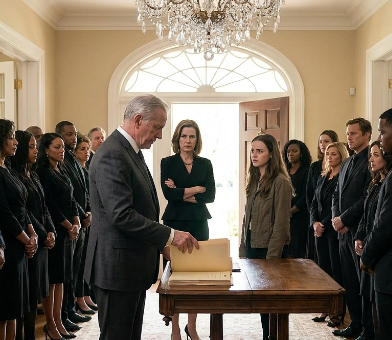
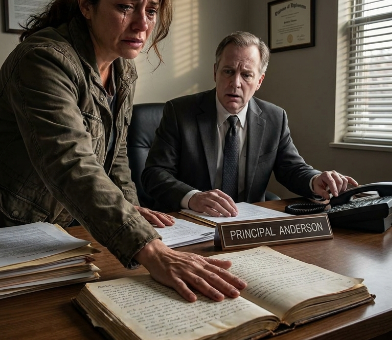
I flipped to page 12. There it was. My mother’s handwriting, elegant and firm. It stated that no corporate amendment or stock dilution was legal without the physical signature of her blood heir upon reaching the age of twenty-four.
I turned twenty-four three days ago.
I stood there in the dark, reading the words over and over. I wasn’t an impostor. I was the owner. I felt a surge of cold fury, so intense it made my head spin. Victoria had lied to me, to the board, and to the world. She had manufactured a story of my incapacity just to get her hands on the Vale fortune.
I knew I couldn’t go back to the archives. If I stayed, she would eventually find out who I was, or she would finish selling the company and disappear with the money. The anniversary gala was happening upstairs in the grand ballroom. Everyone who mattered was there. Investors, city officials, the press.
I shoved the folder into my bag and walked toward the freight elevator. I didn’t care about the risk. I didn’t care about the consequences.
The lobby was a blur of gold and white light. The champagne was flowing, and the sound of a string quartet echoed against the marble. I looked like a wreck, my uniform stained with dust, my hair a mess. I walked straight toward the main desk.
“You aren’t supposed to be here,” a security guard shouted, moving toward me.
I ignored him. I saw Victoria standing near the podium, looking regal in a silk gown that probably cost more than my annual salary. She was laughing at something Marcus said.
“Get that girl out of here,” Victoria said, not even looking at me, her voice sharp and dismissive.
Two guards grabbed my arms, their grip bruising. They started dragging me toward the heavy brass doors.
“Victoria!” I yelled.
She turned, her eyes narrowing as she tried to place me. “Who is this? Get her out before she causes a scene.”
“I am Charlotte Vale,” I said, my voice shaking but loud enough for the room to fall silent.
Victoria laughed, a cold, brittle sound. “You’re delusional. The Vale girl died years ago. You’re just a disgruntled clerk.”
I pulled the folder from my bag and slammed it onto the marble reception desk. The sound echoed like a gunshot.
“Open it,” I commanded, staring her down. “Open to page twelve.”
She didn’t move. She just stared at me, her face pale as a sheet. Marcus stepped forward, his face red with rage. “You little liar,” he hissed, reaching for the document.
“Don’t you touch it,” I said, my voice steady. “Arthur, tell them.”
Arthur Pendelton, the senior trustee, was standing in the shadows, his face buried in his hands. He looked up, his eyes filled with such profound shame that I almost felt sorry for him. He walked over to the desk, his hands trembling as he looked at the document.
“It’s real,” he whispered. “It’s her mother’s signature.”
Victoria’s eyes darted around the room, looking for an exit, but the cameras were already there. The news crews had swiveled their lenses toward us, the red lights blinking in unison.
“Arthur, shut up,” Victoria snapped, her voice trembling. “She stole that.”
“I didn’t steal anything,” I said, looking directly at the cameras. “This is the founding charter of Solmere Enterprises. It says the shares cannot be diluted without my signature. I am twenty-four. I am the sole heir.”
The silence in the room was absolute. I looked at Victoria, seeing the mask of the powerful executive crack. She wasn’t a queen anymore. She was just a thief.
“Take them,” I told the guards, gesturing toward Victoria and Marcus. “Both of them.”
“You can’t do this!” Marcus shouted, struggling as the guards moved in. “You don’t have the authority!”
“I am the majority shareholder,” I said, my voice cold and clear. “You’re fired.”
The federal fraud investigators arrived forty minutes later. I spent the rest of the night in a flurry of paperwork, signing documents, and watching as the people who had tried to erase me were led out of the hotel in handcuffs. They didn’t look at me as they passed. They couldn’t.
By dawn, the chaos had died down. I walked to the penthouse suite and stepped out onto the balcony. The city of Chicago was waking up, the skyline glowing in the soft light of morning.
I heard a metallic scraping noise from below. I looked down. Two maintenance workers were on a ladder, using a heavy wrench to unbolt the nameplate from the grand entrance archway. The brass plate that said “Victoria Sterling, Board Chair” clattered to the sidewalk.
I stood there, holding the brass crest key that had been my mother’s. I had won. But standing there, watching the dust settle, I didn’t feel like a victor. I felt like a girl who had lost everything, only to find that the house she had fought so hard to reclaim was just a shell.
The board would vote to keep me, of course. The lawyers were already calling, wanting to talk about governance and restructuring. But I wasn’t thinking about the empire. I was thinking about my mother, and the fact that no amount of money could ever fix the years we had lost to greed.
I pushed the heavy glass door open and walked back into the suite. There were so many calls to make. So many people to fire. So much of the past to bury.
I looked at the desk, where the Founding Charter lay open. It was just paper, after all. But it was the only thing I had left of her. I realized then that I wasn’t just reclaiming a company. I was trying to reconstruct a life that had been broken into pieces.
I picked up the phone. The screen flashed with dozens of notifications, but I ignored them all. I just stood there, waiting for the phone to ring again. I knew someone would call, and I knew what I would have to say next.
The door to the suite was still open. I didn’t feel like closing it. I just wanted to see who would be the first to walk through.