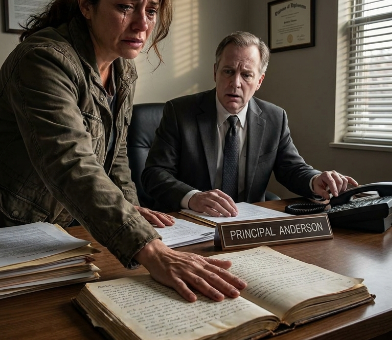
My mother and sister have treated me like a line of credit for the better part of a decade. I’m the director of logistics for a firm in Seattle, which means I spend my days managing thousands of moving parts, ensuring that nothing goes missing and that every single unit is accounted for. It’s a clean, efficient life. My mother, Eleanor, and my younger sister, Chloe, never understood that. To them, my success was just a nuisance that needed to be managed, a bottomless well they were entitled to dip into whenever Chloe wanted a new designer bag or Eleanor needed to keep up appearances in our hometown.
I stopped being a person to them a long time ago. I became a utility.
The last time I saw them was three months ago during a brief, forced holiday visit. I kept my wallet locked in a portable safe in my hotel room, but I made one mistake. I left my laptop open for ten minutes while I went to grab a coffee downstairs. It was enough. I didn’t realize it until I got back to Seattle and noticed a series of strange pings on my credit report. Someone had been digging. I didn’t call them out. I didn’t make a scene. I just quietly enrolled my high-limit American Express Gold Card into a specialized institutional security program designed for high-asset corporate accounts.
I knew who was knocking on the door. I just made sure the lock was upgraded before they tried to kick it in.
At 2:14 p.m. on a Tuesday, my phone buzzed on my desk.
I was reviewing shipping manifests for a cross-Pacific transit route. When I saw Eleanor’s name, I already knew the pitch. I answered, and the sound of her laughing hit the speaker like a physical blow. She sounded high on the thrill of it, the background noise filled with the frantic, upbeat hum of a luxury boutique.
“Every single cent is gone,” she crowed, her voice sharp with that familiar, predatory glee. “You thought you were so clever hiding your money from your own flesh and blood? Think again. A $999,000 charge just went through on your gold card for Chloe’s dream Hawaiian vacation. Private villa, yacht charter, the works. That is what happens, you worthless girl. Happy spending.”
She was waiting for me to scream. She wanted to hear me panic, to beg her to reverse it, to threaten her with police so she could laugh at my desperation. My heart didn’t race.
It actually slowed down. I looked at the corner of my monitor where a tiny, unobtrusive icon was blinking.
“Don’t celebrate too early, Mother,” I said. My voice was as steady as a heartbeat.
She let out a scoff that sounded like a serrated blade. “Don’t you dare talk to me about early. Enjoy the bankruptcy.” Then she hung up.
I didn’t call the bank to flag the card. I didn’t send a frantic text to the resort. I just sat there and watched the data. The system I’d set up was a beast. It wasn’t designed for retail disputes; it was designed for grand larceny. Because the charge was nearly a million dollars, a figure that dwarfed my typical monthly spending by thousands of percent, the server didn’t just decline the card. It did something much more dangerous. It initiated a soft authorization hold.
It let the charge pend. It gave the resort just enough time to confirm the transaction while the American Express global security team silently triangulated the terminal ID, the IP address of the booking, and the physical location of the user.
I watched the progress bar on my secure dashboard. Every second they spent feeling like winners was a second the system spent gathering the evidence it needed to bury them.
I spent the next four hours finishing my work. I checked the logistics reports. I answered three emails from my regional managers. I lived my life, knowing that at 6:12 p.m., the trap would snap shut.
When I walked out of my office building, the air in Seattle felt sharp and clean. The rain had stopped, and the streetlights were just beginning to flicker on. My phone vibrated in my palm. It was Eleanor again.
I didn’t rush to answer. I waited until I reached the corner, watching the traffic flow toward the waterfront. Then I swiped.
There was no laughing this time. No clinking glasses. The silence on the other end was heavy, punctuated only by the echo of a high-ceilinged room and the sound of someone crying. It sounded like a security office.
“Audrey… please,” she whispered. Her voice was thin, stripped of all that malice from earlier. “Tell me what you did.”
I stopped walking and leaned against the cold brick of the building. “I didn’t do anything, Mother.”
“They won’t let us leave,” she shrieked, the panic finally breaking through. “The resort security and two police officers are standing right here at the desk. They say the card belongs to a corporate account and that we’re being detained for presenting stolen credentials. They think we’re part of an international fraud ring! Just tell them it was a misunderstanding! Tell them you authorized it!”
I listened to her beg. It was a strange sound, hearing the woman who had spent years telling me I was nothing now pleading for me to save her.
“I can’t tell them that,” I said, my voice quiet. “That would be a lie. And unlike you, I don’t manufacture fiction to survive.”
“Audrey, please!”
“The system did this, Eleanor. Not me.”
I didn’t tell her about the high-asset safeguard program. I didn’t tell her that the moment they touched that card, they tripped a wire that alerted the state of Hawaii to institutional grand larceny. I didn’t mention that the security logs were already in the hands of the police and that my legal team was currently reviewing the automated incident report to ensure my name was completely severed from their mess.
“They’re taking Chloe’s phone,” she sobbed. “They’re talking about handcuffs.”
“You shouldn’t have done it,” I said. It wasn’t an insult. It was just a fact, like saying the sky is blue.
I pulled the phone away from my ear and tapped the end call button. I didn’t block her number, but I knew she wouldn’t be calling me again. Not for a very long time.
I opened my security app and finalized the affidavit. I clicked the button that verified I had never authorized the transaction and that the card had been used fraudulently. The digital signature locked into place. The $999,000 liability vanished from my profile, replaced by a clean, clear slate.
The next two days were a blur of reports, but I wasn’t the one doing the work. The bank’s legal department was. They didn’t need me to file a police report; they had already done it. By the time the news reached my extended family, the story had already been written by the district attorney’s office. First-degree identity theft. Attempted grand larceny. The evidence was all there, recorded on the resort’s cameras and the bank’s encrypted servers.
I didn’t go to Hawaii. I didn’t pay for their lawyers. I didn’t even respond to the flurry of panicked, threatening voicemails from my aunts and cousins who couldn’t understand why I wouldn’t just “fix it.” They thought I had the power to make the world go away for Chloe. They didn’t realize that for the first time in my life, I was the one who had finally decided to let the world stay exactly as it was.
Two weeks later, the office was quiet. I sat at my desk as the sun began to dip behind the Olympic Mountains, turning the water of Elliott Bay into a sheet of hammered copper. My tea was still warm.
I looked at the desk. The new card, reissued and pristine, sat in its envelope. I didn’t even open it yet. I just looked at the reflection of the office lights on the gold surface. It was quiet. Everything was exactly where it was supposed to be.
I turned my phone face down. The silence in the room was the best thing I had ever earned.