The alert on my phone was just a bank notification, but the screen felt heavy in my hand when it pinged at 9:14 in the morning. It was a sterile, automated update: Estate Account 4920-B, Final Settlement, Balance: $0.00. I stared at the numbers for a long time, sitting in my small, rented apartment in Columbus. It was the final nail in the coffin of my father’s legacy. For six years, my life had been measured by the low, mechanical hum of his oxygen concentrator, the sharp, medicinal smell of antiseptic, and the weight of his body as I helped him from the bed to the chair.
I was the only one of the four of us who didn’t go to college. In my family, that was a kind of moral failing. My brother Julian, an attorney who treated the world like a courtroom, and my sisters, Brenda and Chloe, treated my caregiving as a role I was born to play. “Well, Clara’s life wasn’t going anywhere anyway,” I had heard them say over speakerphone more than once.
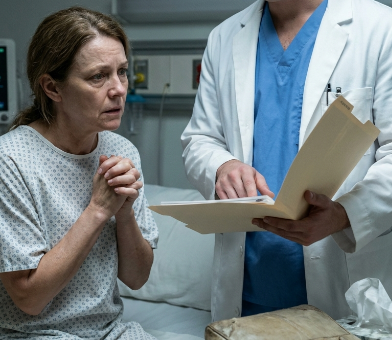
They were right, in a way. I hadn’t gone anywhere. I had stayed right there in the drafty house on Miller Road, scrubbing floors and fighting with insurance adjusters who wanted to cut off Dad’s home health benefits. Dad died in March, and the silence in the house after he was gone was the loudest thing I had ever heard. Three weeks later, we stood in a downtown conference room that smelled of stale coffee and expensive carpet cleaner.
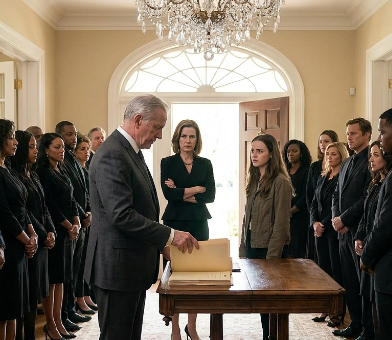
Julian was in his element, a three-piece suit and a watch that probably cost more than my first car. The lawyer, a man who looked like he had been born in a necktie, read the will with mechanical speed. The house went to Julian. The investment accounts went to Brenda and Chloe. Then, he looked at me. “To my daughter, Clara, I leave the absolute ownership and entire contents of the Kenmore chest freezer located in the detached garage.”
Brenda had let out a sharp, mocking laugh that cut through the silence. “Well, you always did like leftovers, Clara,” she had snickered. I didn’t fight them. I didn’t want a seat at their table. I just wanted it to be over. I signed the paperwork, walked out into the bright, uncaring sun, and felt like a fool. I spent the next eleven months working double shifts at the water treatment plant, trying to forget the look on Julian’s face when he handed me the garage key like he was tossing a scrap to a stray dog.
I didn’t touch the freezer. I couldn’t. It sat in the corner of my rental garage, a heavy, white monolith that felt like a monument to my own failure.
The frost was thick and blue when I finally pried the lid open in February. It was a cold, gray Tuesday, the kind where the air feels like it’s biting you. I had been planning on moving for a week, and the garage had to be cleared. I put on my thickest work gloves, the ones with the reinforced palms, and started pulling out the venison. The meat was frozen rock-solid, covered in layers of ice that had built up over a decade of Dad’s hunting trips. It was tedious, back-breaking work. But then, as I reached the very bottom, my plastic scraper hit something that didn’t sound like meat or ice. It sounded like steel. I cleared away the loose frost with my fingers, my breath pluming in the air.
Wedged against the galvanized floor, frozen into the very foundation of the machine, was a flat, industrial steel toolbox. It was olive drab, the kind of heavy-duty gear that didn’t just end up in a freezer by accident.
My heart started thumping against my ribs. I stood up, walked to my workbench, and grabbed the heavy flathead screwdriver and a rubber mallet. I went back to the freezer, kneeling on the cold concrete. For forty minutes, I didn’t think about my siblings or the house or the years I had wasted. I just thought about the ice. I chipped away the perimeter, my hands raw and blistered, until the toolbox finally gave way with a sharp, sickening crack that echoed off the garage walls. I pried the rusted latches open with a grunt. Inside, protected by thick rubber gaskets, was a vacuum-sealed Mylar bag. I cut it open with my utility knife.
The contents made the world go quiet. There was a bound ledger, full of Dad’s sharp, precise drafting script, the kind of handwriting that had built the city’s infrastructure, and a leather document wallet. I opened the wallet and found twelve sheets of paper. They weren’t receipts. They were certified offshore bearer bonds, each one marked with a $100,000 face value. One point two million dollars. My hands were shaking so hard I almost dropped them. I dug deeper and found a letter, written in Dad’s hand. It was dated five years ago. “For the one who actually stayed behind to watch the gate,” the first line began. “The house and the investments they think they are inheriting are already hollow shells, Clara.”
I had to sit down on the concrete, the cold seeping into my jeans, as I read the rest of the letter. Dad had spent his life as a senior engineer, and he had seen things, corporate greed, systemic fraud, and the same firm that Julian now defended, building high-rises on foundations of lies. He had kept the proof. He had used the data to leverage a private buyout, converting his wealth into these bonds, and he had spent the last five years of his life drawing maximum home equity lines of credit against the house and cross-collateralizing the investments until they were nothing but debt. He had set a trap, and he had waited for the person who actually cared enough to look in the freezer to find it. The realization didn’t hit me all at once. It was a slow, cold realization that washed over me, layer by layer, just like the ice.
The confrontation happened a week later. Julian, Brenda, and Chloe were sitting in the same conference room, looking like they owned the world. Julian checked his watch, his eyes narrowed with that familiar, patronizing impatience. “Let’s wrap this up, Clara,” he said, pushing a title release form toward me. “I’ve already signed the listing agreement for the house. The girls are liquidating the portfolios today. We don’t have time for this.” I didn’t reach for the pen. I reached into my bag and pulled out the thick, unredacted debt ledger from the bank’s lienholder department. I slid it across the mahogany table until it tapped against his gold watch. Then, I laid one of the $100,000 bearer bonds down right next to it.
“You can keep the house, Julian,” I said, my voice steady, the same tone I used when I had to tell a crew that a main line had burst at 3:00 in the morning. “But you’ll need to clear the $600,000 senior equity lien Dad took out three years ago before you can sell a single brick.” I watched the color drain from Julian’s face. It wasn’t the face of a man who had won; it was the face of a man who had suddenly realized he was drowning. Brenda grabbed the ledger, her hands trembling as she scanned the pages. She looked at me, her mouth hanging open, the sneer gone. “What is this?” she whispered.
“It’s the truth,” I said, my voice cold. “The house is a liability. The investments are collateral for a default loop. Everything you thought you were getting is just debt.” Julian tried to speak, his composure fracturing into a sputtering, desperate rage, but I was already standing up. I gathered the bonds into my bag, feeling the weight of them against my side. I looked at the three of them, the corporate lawyer and his sisters, sitting in a room they had thought was their kingdom. “The contents of the freezer belong exclusively to the person who didn’t mind the leftovers,” I said. “Have fun paying off the debt.”
I walked out of that office and didn’t look back. I didn’t wait for the screaming. I didn’t care about the lawsuits they would threaten or the phone calls they would inevitably make. I just walked to the parking garage, got into my car, and drove until the city skyline was just a smudge in the rearview mirror.
Three weeks later, I stood in the driveway of a small cottage about an hour outside of town. It was quiet here. The air smelled of pines and damp earth, not city exhaust and antiseptic. I watched as the movers lifted the old Kenmore chest freezer from the back of the truck. They carried it around to the side of the yard, near the garden shed. I had told them to leave the lid open. It sat there in the afternoon sun, the heavy white lid pointing toward the sky, the interior completely defrosted, clean, and empty. I sat on the porch with a cup of coffee, the steam curling into the air. I didn’t feel like a hero. I didn’t feel like a victim anymore, either. I just felt quiet. For the first time in six years, the silence didn’t feel like a burden. It felt like a blank page. The freezer was empty, and so was my past. I took a sip of my coffee, watched the sun dip below the trees, and waited for whatever came next.