How My Husband Tricked Me Into Signing Away Our Home and Met My Father’s Irrevocable Trust

The last normal thing Gordon said to me that Tuesday morning was that he needed the blue pen from the ceramic crock by the coffee maker because his favorite one had run dry during his quarterly review prep. He stood right there by the kitchen counter in the heavy wool suit I had pressed the night before, his shoulder slightly hitched the way it always got when he was running ten minutes behind his usual carpool schedule. He smelled faintly of the bay rum shaving soap his sister had sent him for Christmas, a sharp, clean scent that had been part of our kitchen mornings for three decades.
The sun was hitting the oak table in a long, bright stripe, catching the small water ring left behind by my mug, and I remember thinking how ordinary everything looked, how steady and unmovable the thirty-one years we had piled up together really were. He didn’t kiss my cheek before he grabbed his leather briefcase from the floor, which wasn’t like him, but I told myself he was just preoccupied with the client presentation downtown, the big one with the regional housing board that he had been talking about for weeks. He laid a single document flat near the salt shaker, tapped the yellow sticky note near the bottom with his index finger, and told me it was just a routine county tax exemption form we needed to keep the local assessment from jumping next quarter. I picked up the blue ballpoint pen without reading a single word because Gordon was my husband and we didn’t keep secrets from each other, or at least that was the story I had told myself every single day since we moved into the Maple Street house when Reagan was still in office.
The weeks that followed had that strange, sliding quality of time when something is slowly shifting underneath your feet while everything on top stays completely still. Gordon started coming home later, muttering about late-night audit meetings and downtown traffic snarls that never used to exist on the Northside route. He stopped eating the dinner I left warming in the oven, claiming his stomach was acting up from too much coffee and fast food during the day, and he began taking his phone with him into the bathroom, something he hadn’t done since our kids were teenagers sneaking calls to their high school sweethearts. I found myself wandering down the hallway at odd hours, stopping by the closed door of our home office to listen for the low, rumbling hum of his voice talking in tones too quiet to make out through the solid pine. I tried to tell myself I was just being a foolish, middle-aged woman with too much time on her hands now that the administrative assistant job at the middle school had gone down to three days a week.
My father, Arthur, had always told me that paranoia was just imagination running without a bridle, and I spent those November nights trying to rein myself in, telling myself that thirty-one years of shared grocery lists and Sunday dinners didn’t just evaporate because a man forgot to kiss his wife goodbye on a Tuesday morning. But the small details kept refusing to line up the way they were supposed to, like buttons on a winter coat that had been started on the wrong eyelet. Gordon started spending his Saturdays helping his mother, Evelyn, clear out her garage across town, though Evelyn had lived in that same small brick ranch for forty years and had never once wanted a single thing moved without calling a professional mover. Every time I asked if I should drive over and bring them some sandwiches, Gordon would wave his hand dismissively and tell me the old lady just had a bunch of heavy junk she wanted hauled to the curb, and there was no sense in me getting my good slacks dirty for a load of rusty lawn furniture and old canning jars.
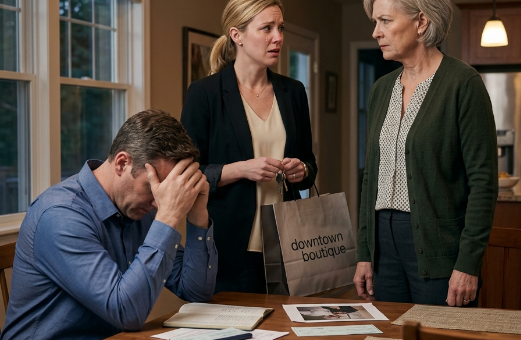
The postcard arrived on a Thursday in late January, tucked right between the grocery circular and a utility bill that was three dollars higher than usual. It was stiff, greenish cardstock from the county recorder of deeds, addressed to me in that blocky, machine-printed font that always means something official and unpleasant. I stood right there in the entryway with my boots still unzipped, holding the mail against my chest because the hallway felt suddenly drafty, and read the three lines of text three times before my brain actually let the words settle into my understanding. According to the clerk’s office, a quitclaim deed had been executed and recorded three days after that Tuesday morning in October, transferring full, unencumbered ownership of our four-bedroom Maple Street property to Evelyn Vance, Gordon’s mother. My hands started to shake, a fine, trembling vibration that started in my wrists and moved all the way up into my jaw, making my teeth click together like I was standing outside in a January blizzard without a coat.
I dropped my leather gloves on the small pine bench by the door and walked into the den, my boots clicking too loud on the hardwood floors, and sat down at the heavy oak desk where Gordon kept his tax folders and his ledger books. The joint savings account we had spent thirty-one years building, the steady nest egg fed by every paycheck I brought home from the school office and every bonus Gordon earned at the regional management firm, showed a principal balance of exactly zero dollars and zero cents. Below that clean, horrifying row of zeros sat a single transaction record from seventy-eight hours earlier, a wire transfer moving the entire one hundred and eighty thousand dollars out of our names and into a private account registered solely to Gordon and Evelyn.
Before I could even catch the breath that had somehow gotten stuck in the top of my throat, the doorbell let out that sharp, electronic chime that always made the dog bark if we still had one. I walked to the front door like I was walking through deep water, my legs feeling heavy and stiff, and pulled it open to find a young man in a fleece vest holding a thick manila envelope and looking very anxious to be anywhere else on earth. He didn’t say a word, just thrust the papers into my hands, muttered something about being served, and turned around before my foot had even settled back on the porch mat. Inside the envelope was a petition for dissolution of marriage filed in the county family court, alongside a sworn financial affidavit signed by Gordon’s lawyer claiming that there were no liquid marital assets to divide and that I held no real estate rights because the home had been lawfully conveyed to a third party months prior.
I stood in that hallway for I don’t know how long, listening to the refrigerator hum in the kitchen and the distant sound of a garbage truck grinding its gears down at the corner of Elm and Fourth. Gordon didn’t come home that night, and when I checked his closet the next morning, half of his suits and all of his good dress shoes were gone, leaving behind only the wire hangers swaying gently against the cedar lining like skeletons rattling in a closet.
The drive downtown to the old limestone bank building took twenty minutes through sleet that was just starting to turn the windshield gray and slushy. The parking garage smelled of exhaust and damp concrete, the exact same smell I remembered from the days when my father used to bring me down here to eat peanut butter crackers out of his briefcase while he waited for court files to dry. Dad had given me the spare brass key to his safe deposit box three weeks before he passed away in the hospice care facility out on the highway, back when his fingers were like dry twigs and his voice sounded like dry leaves scraping across a sidewalk. He had squeezed my hand with a grip that surprised me, given how thin he had gotten toward the end, and told me that Gordon was a man who looked good when the sun was shining but didn’t have strong bones.
He told me that if the weather ever turned cold, I shouldn’t bother asking for permission or waiting for an explanation, I should just walk straight down to the vault and open the box myself. The vault clerk was a young woman with a neat silver badge pinned to her cardigan who didn’t remember me from Adam, but she checked my signature against the old yellow card from 1994 and led me down the narrow corridor into the small viewing room with the green felt table and the heavy steel door. Inside the long metal box sat a single thick, black vinyl binder with my father’s golden initials stamped into the leatherette corner, looking very solemn and very permanent under the recessed fluorescent light. Tucked right into the front pocket was a heavy linen envelope marked with my name in my father’s precise, fountain-pen handwriting, the ink slightly faded around the loops of the letters like it had been sitting there waiting for half a lifetime.
When I unzipped the binder, I found the machinery my father had built before Gordon and I had even picked out the wallpaper for the Maple Street nursery. Decades ago, when Dad helped us secure the original parcel of land and provided the cash for the foundation pour, he knew Gordon was a man with a loose foot for money and a mother who liked to run other people’s households from the back seat of a Buick. Dad hadn’t just handed over a check or put our names on a standard warranty deed because he didn’t trust simple arrangements when complex ones were safer. Being a master estate attorney who spent forty years untangling other people’s family messes in this very county, he had quietly established the Arthur Miller Irrevocable Trust, naming me as the sole primary beneficiary for my natural life. The real estate title and the core capital funds that later grew into our one hundred and eighty thousand dollar savings account were formally funded through that trust structure from day one, protected by a rigid spendthrift clause and explicit deed restrictions filed with the state recorder before Gordon even knew what a quitclaim form looked like.
Under the terms Dad had drafted with his usual stubborn thoroughness, no third party, not a spouse, not a creditor, and certainly not a mother-in-law with an eye for suburban real estate, could ever encumber, transfer, sell, or claim rights to the property or its core trust principal without the express written consent of an independent institutional trustee. Attached to the trust documents was a certificate from a regional trust company in Columbus, along with a pre-executed power of attorney and recorded notifications that rendered any private paperwork Gordon had slipped under my nose on that Tuesday morning completely null and void before the ink was even dry.
Gordon had figured I was simple-minded enough to sign whatever he put in front of me as long as he used the right tone of voice and wore his blue client-meeting suit. He didn’t understand that my father had spent forty years watching men like Gordon try to slide out of the back door with someone else’s harvest, and that Dad had built a fence so high and so deep that no amount of yellow sticky notes could ever jump it. I didn’t hire a fancy downtown lawyer for the preliminary family court hearing three weeks later because I couldn’t afford one after Gordon cleaned out the joint accounts, and honestly, I didn’t need one. I tucked my father’s black vinyl binder under my arm like it was a church hymnal, put on my darkest navy wool suit with the silver buttons, and drove myself down to the county court building alone through a morning rain that made the courthouse steps look like polished slate.
The family court chamber was small and smelled faintly of floor wax and wet wool from the people sitting in the gallery waiting their turn on the docket. Gordon sat at the defense table next to a lawyer with silver hair who looked like he spent more time at the country club than he did reading state statutes, and Evelyn sat two rows back in the gallery wearing her good pearls and looking like she was already measuring the living room curtains for her own house. Gordon wouldn’t turn his head to look at me when I took my seat at the opposite table, keeping his eyes fixed on a yellow legal pad where he was writing little cross-hatch marks with a silver mechanical pencil.
Judge Sarah Vance took her place on the bench right at nine o’clock, flipping through the thick case file with fingers that moved with the speed of someone who had seen every trick a small-town husband could invent since breakfast. She looked down over her half-moon reading glasses at Gordon’s lawyer and asked him to explain the emergency petition for temporary support and preliminary property allocation in Reynolds versus Reynolds. The lawyer stood up, smoothing his tie with a practiced motion, and told the court that Mrs. Reynolds had no claim to the marital residence because it had been lawfully conveyed via a signed quitclaim deed executed three months ago, and that the bank accounts referenced in the filing were liquidated under his client’s lawful authority as a joint account holder to settle family debts. Judge Vance listened without nodding, her expression remaining entirely flat, and then she turned her gaze toward me, asking if I had anything to submit regarding those claims.
I stood up slowly, making sure my heels didn’t click too loud against the linoleum, and told the court that I had some documents for the record. I walked the black vinyl binder up to the bailiff, who carried it to the judge’s desk as if it weighed fifty pounds, and watched as Judge Vance unlatched the cover and began turning the heavy parchment pages. The silence in the room got very thick and very quiet, the kind of quiet where you can hear the radiator hissing in the corner and the heavy ticking of the old brass clock on the back wall.
Judge Vance read for nearly five solid minutes, her eyes moving back and forth across the certified trust agreements and the recorded deed restrictions from thirty years ago without missing a single line. When she finally looked up, her face had gone from professional neutrality to something very cold and very sharp, the kind of look my father used to get when a witness started lying on the stand about where he was on a Saturday night. She looked down at Gordon’s lawyer and asked him if he had bothered to perform a full title search with the county clerk before filing an affidavit swearing the property was free and clear. The lawyer started to stutter something about his client’s assurances and standard preliminary checks, but Judge Vance cut him off with a single sharp wave of her hand that made him snap his mouth shut like a turtle pulling its head into its shell.
She told the courtroom that the property was governed by an irrevocable trust with recorded spendthrift provisions, that I had no legal capacity to execute an individual quitclaim on trust property, and that Gordon’s purported transfer to his mother was void ab initio, completely illegal from the moment the ink touched the paper. Gordon jumped out of his chair so fast his metal folding chair screeched against the floor, stammering that I had signed it with my own hand and that he had the paper right here in his briefcase to prove it. Judge Vance slammed her gavel down once with a crack that made Evelyn jump in the gallery, ordering him to sit down and telling him in a voice like broken glass that he had manipulated his wife into signing a void document to convert property that never belonged to him in the first place.
The judge didn’t stop with the house, either, because my father’s trust documents had covered the core capital just as tightly as they covered the acreage on Maple Street. She ordered an immediate freeze on all bank accounts held jointly or individually by Gordon and Evelyn, giving them exactly forty-eight hours to restore the entire one hundred and eighty thousand dollar balance to the designated trust account or face a warrant for felony conversion and grand larceny. In the second row of the gallery, Evelyn let out a sharp, audible gasp that sounded like a dry pump losing its prime, and clutched her pearls so hard her knuckles turned white under the gallery lights. Gordon dropped back down into his leather chair like the bones had suddenly been pulled out of his legs, staring at the green blotter on the defense table as if he expected the wood to open up and swallow him whole.
By Friday afternoon at three o’clock, the branch manager at the downtown bank called my cell phone to let me know that the full wire transfer had hit the trust ledger, coming from a private liquidation of personal stocks and money markets that Gordon and his mother had been forced to scramble together before the weekend deadline. The county land clerk purged the fraudulent quitclaim deed from the public records before the office closed for the week, putting the title right back where my father had left it thirty years ago when he sat at his kitchen table and wrote out the future with a fountain pen.
The divorce itself didn’t take long after that because Gordon’s high-priced lawyer advised him that any further resistance would only speed up the criminal referral sitting on the prosecutor’s desk down on the second floor. Gordon signed every paper the trust representative put in front of him without ever looking up from the carpet, moving his things out of Evelyn’s spare bedroom into a small, furnished apartment on the north side of town where the train tracks run right behind the parking lot. On Saturday evening, I stood on the front porch of the Maple Street house while the sun went down behind the big pin oak in the yard, casting long, quiet shadows across the siding that Gordon had never quite gotten around to painting the color I wanted. The neighborhood was entirely still except for a stray dog barking down toward the creek and the distant sound of someone starting up a lawnmower a block over.
I reached into the deep pocket of my cardigan and pulled out the small brass key to my father’s safe deposit box, feeling the cold, smooth metal against my palm where the teeth had been worn down by years of turning in the dark. Dad had seen the shape of Gordon’s character long before I was willing to admit that thirty years of marriage could have a hollow center, and he couldn’t keep the cold weather from coming across the porch, but he had made sure I had a roof over my head when the snow finally started to fall. I slipped my house key into the front door lock, turned the brass knob until the latch clicked back with a clean, familiar sound, and stepped inside my warm, quiet home, closing the heavy wooden door firmly behind me.