How My Wife Slapped My Orphaned Sister and Met the Hard Drive Recording on Our Kitchen Wall

Sixteen months. That was the exact distance between the state police calling my cell phone at 2:14 in the morning and the moment Victoria raised her right hand in the front hallway of our Craftsman house on Oak Ridge Drive. Sixteen months of carrying two kids through grief, high school algebra, and the endless paperwork of guardianship, while keeping the floorboards steady so they would not feel like the earth had dropped out from under them twice. I had built my life around that foundation, timber by timber, contract by contract, working out of the detached garage workshop until my forearms smelled of pine dust and polyurethane.
When you spend ten hours a day sanding down white oak cabinets for custom homes in this part of Maine, you learn to spot a hairline fracture in a plank before it ever goes into a frame. You see where the grain is twisted, where the knot is loose, where the whole piece is going to split the second the first hard winter hits. Victoria was a split right down the center, and I had been too busy smoothing the surface to notice the rot working its way into the grain.
We met at a hardware supply yard in Bangor during a Tuesday morning rush when I was loading three pallets of drywall into the bed of my truck. She was picking up custom brass pulls for a kitchen remodel she was managing for some out-of-state couple who wanted a rustic-chic look in a place that only saw mud and blackflies six months of the year.
She had sharp dark eyes, a quick laugh that sounded rehearsed like a receptionist greeting regulars, and a way of talking about local zoning boards that made me think she had a head for practical business. For the first six months after we got together, she was the easiest person in the world to be around. She brought over cast-iron pans of lasagna, asked Maya about her college applications with a polite tilt of her head, and told me over black coffee that she admired how I didn’t drop my brother and sister into some state-run foster system the second our parents’ car went under the axle of that interstate semi. I thought she was steady. I thought she understood what it meant to take on a debt you never asked for because the people who made you are gone and there is nobody else left on the ledger.
The shift didn’t happen all at once, the way it does in movies where someone flips a switch and turns into a monster.
It was more like water getting behind the paint in a bathroom wall, slow and quiet until the bubble forms and everything starts peeling away in long, slimy strips. The first sign came three weeks after we signed the marriage license and she moved her vanity table into my bedroom. She stood by the kitchen island, looking at the grocery receipt for the week with one manicured fingernail tapping against the granite. Maya and Leo were in the mudroom pulling off their cleats after track practice, laughing loud enough to rattle the windowpanes, and Victoria’s mouth tightened into a thin, white line that looked like a scar. She told me that growing boys eat like stray dogs and that we were spending more on poultry and whole milk in a month than she used to spend on groceries for herself all year. Then she started asking questions about the college trust funds my dad left in a protected account with the credit union in town.
She wanted to know if my name was the only one on the signature card or if Maya’s name was legally tied to the principal. I told her the money was my parents’ life insurance payout and it belonged to the kids until they turned twenty-one, period. She didn’t argue that night, but the look she gave the hallway coat rack told me she had already marked down an expense she hadn’t planned on paying.
By the time winter set in, the house felt smaller every time she walked through the door. She started finding things to complain about that had nothing to do with groceries or college funds. If Leo left his history binder on the dining room table instead of carrying it upstairs to his room, she would sigh like she was carrying the weight of a cathedral on her shoulders and ask me how long I expected her to live in a halfway house. She called them ungrateful little freeloaders when she thought I was out in the garage running the table saw, but the walls in that old house are thick cedar and plaster, and sound carries down the heating vents better than she realized. I confronted her twice about the way she talked to them when I wasn’t in the room, and she cried both times, wiping her eyes with the back of her hand and telling me she was just stressed out trying to be a mother to teenagers who didn’t respect her authority as my wife.
I let it go because I was tired. That was my real failure, the place where the grain gave way. I was so tired from bidding on commercial framing jobs and driving Maya to her SAT prep classes in Augusta that I took the path of least resistance every single time. I told myself she would soften up once the kids graduated and moved into dorms, as if two years of waiting was a fair price to pay for keeping peace under my own roof.
The afternoon the split finally broke wide open started like any other Tuesday in late October. I was out in the garage working on a walnut sideboard for a lawyer down in Orono, running a hand-rubbed oil finish into the top panel until my fingers were slick and dark. The garage door was cracked about six inches so I could smell the damp pine needles outside and hear the gravel crunch in the driveway if anyone pulled in. Around four-forty in the afternoon, the sky turned that flat, bruised color that usually means rain or early frost, and the wind picked up enough to rattle the metal stovepipe against the siding. I checked my watch, wiped my hands on a shop rag, and figured I had enough light left to finish one more coat before walking back into the house for dinner. I didn’t hear shouting from the main house because the planer was screaming while I trimmed a length of cherry molding, but the second I cut the motor and the shop went dead quiet, I heard the back door slam hard enough to shake the dust off the rafters. That was the moment the temperature in the house dropped twenty degrees without a window being open.
I walked across the frozen gravel of the driveway, my boots heavy and gray with sawdust, and pushed open the heavy wooden back door of the kitchen without knocking because it was my own house and I still had the key in my pocket. The silence in the foyer was stretched thin, rigid as glass on the verge of shattering, exactly the way it stayed when I stepped across the threshold and saw Maya standing near the foot of the stairs with her hand pressed flat against her left cheekbone. Leo was right beside her, rooted to the runner rug with his shoulders hunched up around his ears like he was bracing for a second blow, his lower lip tucked tight between his teeth until it looked white. Standing three feet in front of them, her feet planted and her shoulders squared inside her tailored beige sweater, was Victoria, looking like she had just finished reprimanding a lazy employee at a dry cleaner’s. She didn’t look flustered or out of breath. She looked annoyed that anyone had interrupted her schedule.
They had it coming, Arthur, Victoria said, her voice flat, sharp as a razor, devoid of a single drop of regret. Those kids actually thought they could disrespect me under my own roof. Maya turned her head slowly, her eyes locking onto mine as I froze in the entryway with my shop rag still clutched in my right hand. Tears glistened in her eyelashes, but her expression was a raw mix of terror and sudden, desperate hope that someone was finally going to look at the math and see who was lying. Arthur, Maya’s voice cracked. She pulled her fingers back from her cheek, and the skin underneath was already turning a deep, angry crimson where the knuckles had caught her. I felt the air leave my lungs in a short, ragged hiss, and the quiet in the foyer turned suffocating. Leo didn’t say a word, but his eyes were wide and fixed on my face, waiting to see if I was going to ask my wife for her side of the story the way I usually did when she complained about the laundry piling up on the spare bed.
He didn’t do anything, Maya cried out, pointing a trembling hand toward Leo, whose face was flushed red and pale in patches. We weren’t even bothering her. We were getting Leo’s history notebook out of the hall closet so he could finish his homework before dinner and she came out of nowhere shouting about us leaving the pantry door unlatched. My face went completely rigid. The easy, relaxed feeling I usually carried after a day of manual labor vanished like water down a storm drain. I stepped past the coat rack, closing the distance between myself and my younger siblings, my boots clicking hard against the oak floorboards that my father and I had laid down the summer after I graduated high school. What happened, I asked, my voice low and vibrating with a quiet, steady frequency that made Victoria blink once. My eyes moved from Maya’s red cheek down to Leo’s hands, which were curled into tight, helpless fists at his sides. Who touched you? Maya didn’t hesitate for half a second. She pointed straight at Victoria with a finger that wouldn’t stop shaking.
She slapped both of us, Maya said, her voice breaking on the consonants. She struck Leo across the face when he tried to step back into the dining room, and when I told her not to touch him, she hit me too. Then she grabbed my arm and tried to push us out the back door into the yard without our coats. Silence fell again over the hallway, not the comfortable kind that usually settled over the home during dinner prep when the radio was playing low in the corner, but the kind that arrives right before a timber snaps under a load it was never rated to carry. I slowly turned my head to face my wife, feeling the tendons in my neck pull tight. Victoria lifted her chin with that practiced little jerk she used whenever she wanted to show people she was the smartest person in the room. There was no stain of shame on her face, no hesitation in her posture, no sign that she understood the magnitude of what she had just done in the hallway of a house she didn’t build. She looked offended, as though she were the victim of an intolerable breach of manners by two people who had no right to breathe her air.
You put your hands on children, I asked, and the words sounded strange in my own ears, like they belonged to someone else standing behind me in the shadows. Victoria rolled her eyes, crossing her arms over her chest with a quick, dismissive scoff that made her gold earrings swing against her jaw. They were being disrespectful, Arthur, she spat, her tone rising into that sharp, lecturing register she used when she was explaining why my garage workbench was unorganized. They need to learn their place. They act like they own every square inch of this house and they treat me like a maid in my own home. In my house, I said, and the second the words left my mouth, Victoria’s expression hardened into something ugly and small. Her eyes narrowed into slits, and she took a step toward me, her heels clicking hard against the oak like pistol shots in a small room. Your house, she laughed, a dry, rattling sound with no humor in it at all. Arthur, I’m your wife. I’m the woman of this home. What’s yours is ours, and I won’t be spoken to like an outsider by two ungrateful teenagers who live here on your charity.
I stood motionless on the rug, but inside, every protective instinct that had governed my life for the past sixteen months turned to cold, heavy iron. Sixteen months ago, our parents died on Route 9 when an eighteen-wheeler crossed the double yellow line on a patch of black ice coming back from a weekend trip to Bangor. They left Maya and Leo orphaned in an instant, the kind of sudden, absolute silence that takes the color out of the walls and leaves you staring at coffee cups that will never be washed by the people who left them there. I was twelve years older than Maya, twenty-nine at the time, and working six days a week as a licensed commercial contractor while trying to keep my own small crew paid and fed. Taking them in wasn’t a question or a sacrifice I had to debate with myself over a spreadsheet. It was immediate and absolute. I filed for full legal guardianship the next morning, brought them home from the temporary shelter at my aunt’s place in Orono, and turned this house into a safe place where they could grieve without worrying about where their next pair of sneakers was coming from. Victoria knew every word of that history before she ever signed her name on our marriage license at the county courthouse.
During the six months we dated, she had played the part of the understanding partner so well that I never saw the seam where the performance ended and the real person began. She came over with casseroles in foil pans, asked Maya about her chemistry midterms, and told me over dinner how deeply she admired my dedication to my family, as if I were some kind of saint for raising my own flesh and blood instead of dropping them off at a state facility. But the moment Victoria moved her mahogany vanity table and her twenty pairs of shoes into the Oak Ridge house, the air changed from something breathable to something thick with resentment. It started with small remarks about noise in the hallways after nine o’clock, then escalated to complaints about how much milk two growing teenagers went through in a week, how much their track shoes cost at the sporting goods store, and why my focus should be on building a new financial future with her instead of keeping separate college funds in an account with my name on it. Victoria didn’t see Maya and Leo as grieving kids trying to find their footing after their world ended; she saw them as financial parasites and emotional obstacles standing between her and complete control over my income and our property.
And today, that quiet, steady resentment had crossed the line from mean words into physical violence. I stepped directly between Victoria and the children, my broad shoulders blocking her view of their faces. I reached out, placing a heavy, calloused hand on Leo’s shoulder and pulling Maya gently behind my back where she couldn’t see the red swelling on her cheek in the hall mirror. Maya, take Leo into my office, I said, keeping my tone completely flat and controlled so they wouldn’t hear the hammer cocking behind my ribs. Lock the door from the inside and leave the overhead light on. Give me ten minutes. Arthur, Victoria started, her voice shrill and demanding as she reached out to grab my sleeve. Go, I told my siblings, ignoring her hand entirely as if she were made of smoke. Maya grabbed Leo’s hand without another word, their fingers locking together the way they had ever since the night of the funeral, and the two of them walked quickly down the short hallway toward the study. The heavy oak door of my office closed with a firm, solid click that echoed in the quiet house.
Victoria folded her arms across her chest again, her jaw working furiously as she glared at the closed door. Are you seriously treating me like the bad guy here, Arthur, she yelled, her voice climbing an octave. I am your wife. I am trying to keep order in this house because you let them walk all over you, spending thousands on their sports equipment and private tutors, keeping them here like this is some kind of residential hotel for orphans who don’t want to work for anything! I didn’t argue with her or raise my voice to match hers, because shouting matches are for people who still think there’s a middle ground to negotiate. Instead, I turned my back on her and walked down the hall toward the kitchen, my boots leaving small smudges of pine resin on the clean floor. On the wall right beside the pantry sat the flush-mounted touch screen control panel for our home security system, a multi-camera network I had installed myself two years back when I gutted the ground floor and put in new wiring. I touched the screen with a thumb that still smelled of boiled linseed oil. The interior kitchen and hallway cameras recorded continuous high-definition video with clear audio twenty-four hours a day, saving local files directly to an encrypted hard drive in my office desk.
I tapped the screen, scrolling back through the timeline to the exact timestamp of fifteen minutes earlier: 4:48 PM. Victoria followed me down the hall like a shadow, her brow furrowed in sudden confusion. What are you doing, she demanded, her voice dropping into a harder, more suspicious register. Are you even listening to me? I tapped the playback file, and the digital video flared to life in the small color screen with crisp, unforgiving clarity. The camera angle from the upper corner of the kitchen showed Maya and Leo walking calmly past the counter with their school bags over their shoulders. Leo was holding a cardboard box of cereal, setting it down near the sink while Maya looked through the coat hooks for his history binder. Victoria stepped into the frame from the mudroom doorway, her face already contorted in that tight, pinched look of rage. She started shouting at Leo over the cereal box, waving her hands in his face while the boy backed away toward the pantry door, his hands raised defensively. When Leo quietly stepped back toward the closet, reaching for his backpack to get it out of her way, Victoria lunged forward like a striking dog and slapped the fourteen-year-old boy hard across the face with an open palm.
The audio captured the sharp, awful crack of her hand against his skin, a dry, ringing sound that made my own teeth ache in my jaw. When Maya immediately stepped between them, shouting at Victoria to back off and leave him alone, Victoria didn’t hesitate for a microsecond. She grabbed Maya by her wool sweater collar, hauled her forward, slapped her cheek with her right hand with enough force to turn the girl’s head sideways, and began yanking her toward the back door, trying to shove both kids out onto the cold concrete porch without their shoes or jackets. I stopped the video right there, the frozen image showing Victoria’s face twisted in an ugly snarl while Maya’s hands were up trying to protect her throat. I tapped the screen twice, backing up the entire file and sending a duplicate copy directly to my personal cloud drive and to the secure email address of my lawyer down in Bangor. I turned around to face my wife, and for the first time since I had known her, the color was completely drained out of her skin, leaving her looking gray and old under the recessed kitchen lights.
Victoria stared at me, letting out a harsh, disbelieving laugh that sounded like someone dropping gravel onto a tin sheet. Gone, she repeated, her voice rising in panic. Are you completely out of your mind, Arthur? You can’t throw your wife out of the house. We’re legally married. If you think you can toss me out on the street over a minor discipline issue between kids and their stepmother, you’re crazy. A family court judge will laugh you out of the county. You committed domestic assault against two minors under my legal guardianship, I said, taking a single step toward her until she had to tilt her head back to look into my eyes. I have clear, unedited, timestamped video of you striking my fourteen-year-old brother and my seventeen-year-old sister completely unprovoked. I have full audio of you trying to lock them outside in forty-degree weather without so much as a sweater. Victoria blinked rapidly, a flicker of real, animal fear crossing her eyes before her pride rushed back in to cover it up. I… I lost my temper, she stammered, her voice losing its edge for a second. They pushed me to the limit!
The video shows neither of them touched you, raised a hand, or said a single hostile word, I answered, my voice dropping lower until it was almost a whisper. In five minutes, I’m calling the county sheriff’s department to file a formal domestic battery report and request an emergency order of protection. If you are still inside this house when the deputies pull into the driveway, they will remove you in handcuffs and the paperwork will be public record by morning. Victoria’s breath hitched in her throat, and she reached out to grab my arm, her fingernails digging into my flannel shirt. You wouldn’t do that to me, Arthur. Think about my reputation in town. Think about our marriage, think about what people will say at the club! Our marriage ended the second your hand hit my sister’s face, I said without hesitation, shaking her fingers off my arm the way I would brush a burr off my pants. You didn’t marry me because you loved my life, Victoria. You married me thinking my money and my house belonged to you by default, and you thought you could bully two grieving kids until they packed their bags and left. You miscalculated.
I walked past her into the front foyer, pulled a large leather suit bag and two heavy canvas duffel bags out of the hall closet where she kept her spare winter gear, and dropped them hard on the wool runner rug. You have ten minutes to pack your clothes, your makeup, and your jewelry, I said, pointing straight up toward the stairs with an outstretched finger. Everything else will be sorted out through my lawyer during the divorce filing next week. If you touch anything belonging to Maya or Leo on your way up those stairs, I call the state police instantly and let them handle the packing. Victoria stood in the center of the hall, her chest heaving as she realized the trap she had built for herself had just been bolted from the outside. Her voice turned ugly, dropping all pretense of being the refined lady of Oak Ridge Drive. It’s them or me, Arthur, she screamed, her face turning a mottled red as she jabbed a finger toward my chest. You choose right now! You’re choosing two burdening orphans over your own wife? You’re going to waste your thirties raising somebody else’s children while I walk away with nothing?
I looked at her with total clarity, feeling the last ten pounds of guilt evaporate from my shoulders. The anger in my chest had settled into something completely solid and immovable, like a concrete footing cured in the frost. They aren’t somebody else’s children, I said, and every word was clean and cold. They’re my family. And you’re a stranger who made the mistake of putting her hands on them under my roof. I pulled my phone from my pocket, unlocked the screen with my thumb, and opened the phone app with the keypad showing. Nine minutes, I said, holding the screen where she could see the glowing numbers. Victoria stared at me for three long seconds, searching my face for a crack, a doubt, or a bluff that she could call. She found nothing because there was nothing left to find. With a bitter, venomous curse that sounded like something hissing in the dark, she turned on her heel and marched up the stairs, her heavy heels pounding against the wood steps like she wanted to break every board in the flight.
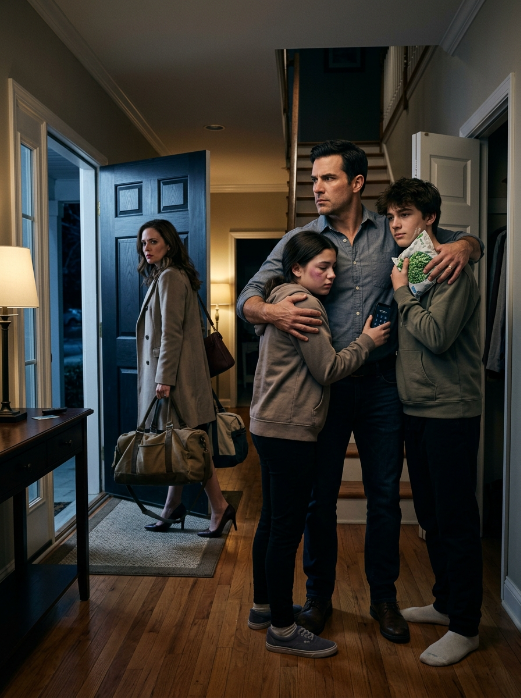
I walked down the hall and knocked twice on my office door. Maya? Leo? It’s Artie. The lock turned instantly, and Maya pulled the door open. Her cheek was already swelling and turning a pale, sickly shade of purple under the study light, but her eyes were steady and dry. Leo was standing behind her near the bookshelf, holding a bag of frozen peas against his jaw with both hands. Is she going, Leo asked softly, his voice trembling just a little around the edges. She’s packing, I told them, pulling both of them into a tight, firm embrace that felt like the only real thing in the world. She is leaving tonight, and she is never coming back into this house. Ever. Maya let out a long, shuddering breath, burying her face against my shoulder for a second the way she used to do when she was seven years old and scared of thunderstorms. We thought… she told us all afternoon that you’d take her side because she’s your wife and we’re just dead weight, Maya whispered into my shirt. Nobody touches you, I said softly, resting my chin against her hair. Nobody hurts you in this house. Not while I’m breathing. You’re safe here.
Ten minutes later, the sound of heavy luggage coming down the stairs echoed hollowly in the hall. Victoria stood near the front door wearing her wool coat, carrying two jammed duffels and her leather purse over her shoulder. Her face was red and pinched, but her eyes were completely hollow, stripped of all the arrogance she had walked into the house with three years ago. I stood six feet back in the hallway, my arms folded across my chest, watching her like she was a trespasser I didn’t care to know. Leave your keycard and the garage remote on the oak table, I said. Victoria slammed the plastic card and the visor remote onto the wood surface hard enough to rattle the silver tray and bounce the keys against the edge. You’re making the biggest mistake of your life, Arthur, she said, her voice shaking with rage as her hands gripped the suitcase handles so hard her knuckles turned white. You’ll end up old and bitter in this big empty house alone with a couple of kids who won’t even remember your name when they’re twenty-one. Go, I said.
Victoria yanked the heavy front door open, stepped out onto the concrete porch into the cold October wind, and slammed the door behind her with a crash that rattled the glass in the sidelights. I didn’t wait at the window to watch her car back out of the driveway or see where she parked her sedan. I walked right over to the digital keyless entry panel by the frame, entered my master administrator code, and wiped Victoria’s access profile from the lock memory completely. The electronic deadbolt engaged with a sharp, heavy mechanical click, sealing the front door shut against the night and everything that had come with her. I walked back down the hall to the kitchen where the air still smelled faintly of the garlic bread I had been planning to bake before the afternoon went sideways. Maya and Leo were sitting at the kitchen island, the bag of frozen peas helping the swelling on Maya’s cheek while Leo quietly wiped down the counter where the box of cereal had spilled during the argument.
I washed my hands thoroughly at the stainless steel sink, pulled our heavy cast-iron skillet out from the lower cabinet, and turned on the burner under the copper pot. Maya, keep that ice on your face for another ten minutes, I said, giving them a small, reassuring smile as I reached into the pantry for the pasta. Leo, grab three plates out of the top shelf. I’m finishing dinner. The grandfather clock in the hallway chimed six times, its slow, steady tick filling the room with the sound of time moving forward again. Outside, night was falling hard over Oak Ridge Drive, but inside the kitchen, the air was warm and quiet, and the boundary had finally been set where it belonged.